
Which flooring trends are worth it — and the catch underneath
The trends worth following, and why every one of them still answers to the subfloor underneath.
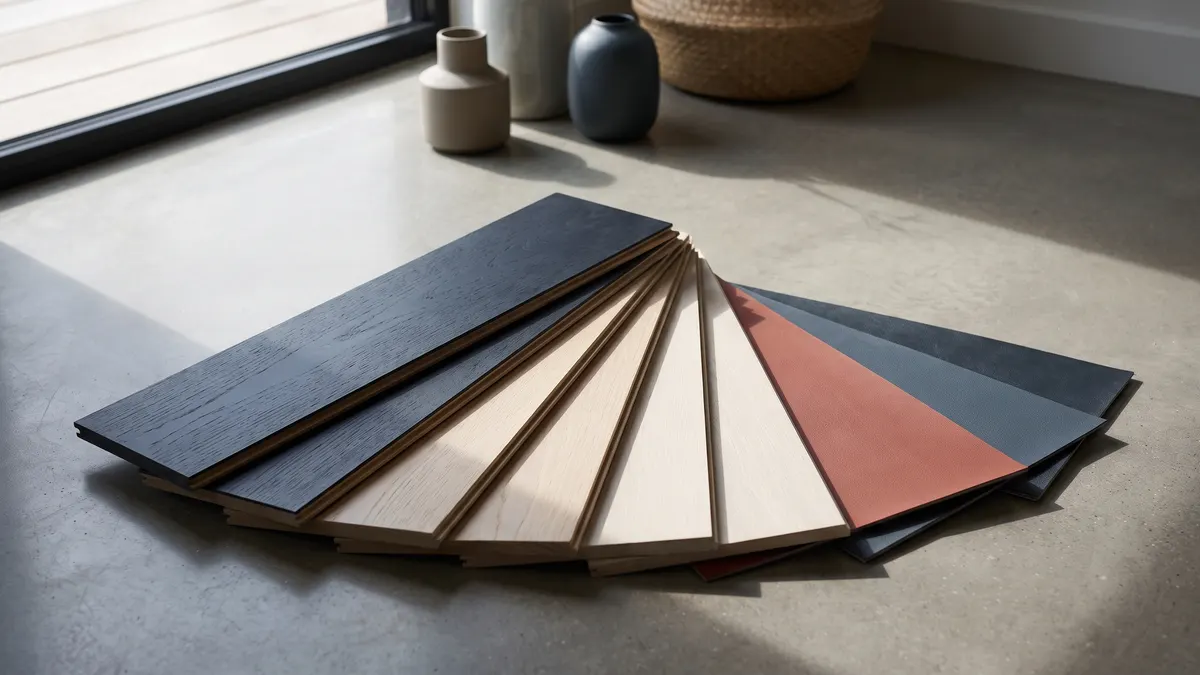
The flooring trends worth following are the ones that still perform in your house — warm oak tones, wide planks, matte finishes and good luxury vinyl all earn their place when the room and the subfloor suit them. A trend rarely fails on its own; it fails when a wide plank is laid over a wavy subfloor and the gaps show, or a matte wood floor goes into a bathroom that stays damp. Choose the look you like, then let the room and what is under it decide whether that look will hold up.
Planning flooring installation in west metro Atlanta? Get a free written estimate.
Warm tones are back, and they wear better here than gray
The cool gray floors that ran for a decade are giving way to warm wood tones — honey, natural oak, caramel and chestnut. Beyond looking current, warm tones are practical in this part of Georgia: fine red-clay dust and pet hair read far less on a warm, mid-tone floor than on a dark or stark one, so the floor looks clean longer between cleanings.
The shift is not only fashion. A warm mid-tone also sits better with the brick and wood trim common in west-metro homes, where a cold gray floor often fought the rest of the house. If you want a floor that still looks right in ten years rather than dated to one particular season, a natural wood tone is the safer bet than whatever is peaking right now.
Wide planks look clean but punish a bad subfloor
Wide planks have fewer seams and make a room feel more open and continuous, which is why they keep gaining ground. The catch is underneath: a wide board spans more of the subfloor, so any high or low spot shows up as a rocking plank or a visible gap, and wide boards also expand and contract more with humidity. They do not forgive an unflat or damp subfloor — they advertise it. The wider the plank, the more the prep underneath matters, not less.
Matte and low-sheen finishes are the practical pick
High gloss shows everything — every scratch, every footprint, every speck of dust in low sun. Matte and satin finishes have taken over partly because they look softer and more natural and partly because they hide daily life. In a house with kids, dogs or a busy entry, a lower sheen is the difference between a floor that looks maintained and one that looks like a map of the week.
There is a tradeoff worth naming: a very flat matte can show water spots on some finishes and is a little harder to buff a shine back into. For most households that is a fair trade for hiding scratches and dust, but if you like a floor with some depth and glow, satin sits between gloss and dead-flat and is the easier one to live with.
Herringbone and patterns: a feature, used in one room
Herringbone and chevron patterns are having a moment, and they do add real character — in the right place. They work as a feature in an entry, a dining room or a kitchen, where the floor is meant to draw the eye. Run through a whole house they get busy and expensive, because the pattern adds labor and cutting waste. One room where it counts is usually the smarter call than everywhere.
Luxury vinyl earned its spot — if you buy the right one
Luxury vinyl plank has become a default for good reasons: a waterproof core, convincing wood looks, and performance over a concrete slab or in a basement where real wood is a risk. But the category runs from excellent to junk. Thin, cheap vinyl dents under furniture and telegraphs every flaw in the subfloor; a thicker rigid-core plank over a properly flattened subfloor is the version that actually holds up. The product grade and the prep decide whether it is a smart floor or a short-lived one.
Two things matter when you shop it: the overall plank thickness and the wear layer on top, which is the clear, sacrificial skin that takes the scratching. A thicker wear layer is what separates a floor that still looks good after a few years of a busy house from one that scuffs through to the printed pattern. Over a slab, a rigid-core plank also stays flatter than a thin, flexible one.
Pick for the room, not the photo
Every one of these trends is a good idea in the right room and a mistake in the wrong one. The quiet decider is always the subfloor and the moisture under it — a slab-on-grade 1990s home and a mid-century house on a crawlspace do not take the same floor the same way. Choose the look you want, then let the room tell you whether it will last.
Questions we get asked
- Is gray flooring out of style?
- It is fading. Warm and natural wood tones are what is replacing it, and they tend to hide dust and wear better in our climate. That said, a floor you already have and like is not worth replacing over a trend — gray that is in good shape still functions fine.
- Are wide-plank floors a problem over an older subfloor?
- They can be. Wide planks reveal an unflat or moving subfloor more than narrow boards do, through gaps and rocking. Over an older subfloor they are still an option, but the floor has to be flattened and the moisture checked first, which is work worth doing before the planks go down.
- Is luxury vinyl as good as it looks?
- The better products are genuinely good — waterproof, durable and convincing. The cheap ones are not; they dent and show the subfloor. The difference is the thickness and quality of the plank and whether the subfloor was prepared, so it is worth stepping up from the lowest price.
- What finish hides scratches and dust best?
- A matte or satin sheen. Gloss reflects light in a way that highlights every scratch and footprint, while lower-sheen finishes diffuse it and read as clean far longer. For a high-traffic home it is the practical choice over a shiny floor.
- Should I pick flooring based on resale or how I live?
- How you live, first. A floor that fights your household — a delicate finish with three dogs, or carpet in a damp basement — fails early regardless of resale appeal. Neutral, durable choices tend to satisfy both, but the daily reality of the room should lead.
Reviewed 2026-10-09 by Dan James, WS Painting & Remodeling LLC.