
Accent walls: when they work and when they are a mistake
An accent wall works when it lands on the wall your eye already goes to. On the wrong wall, or in the wrong room, it chops the space up.
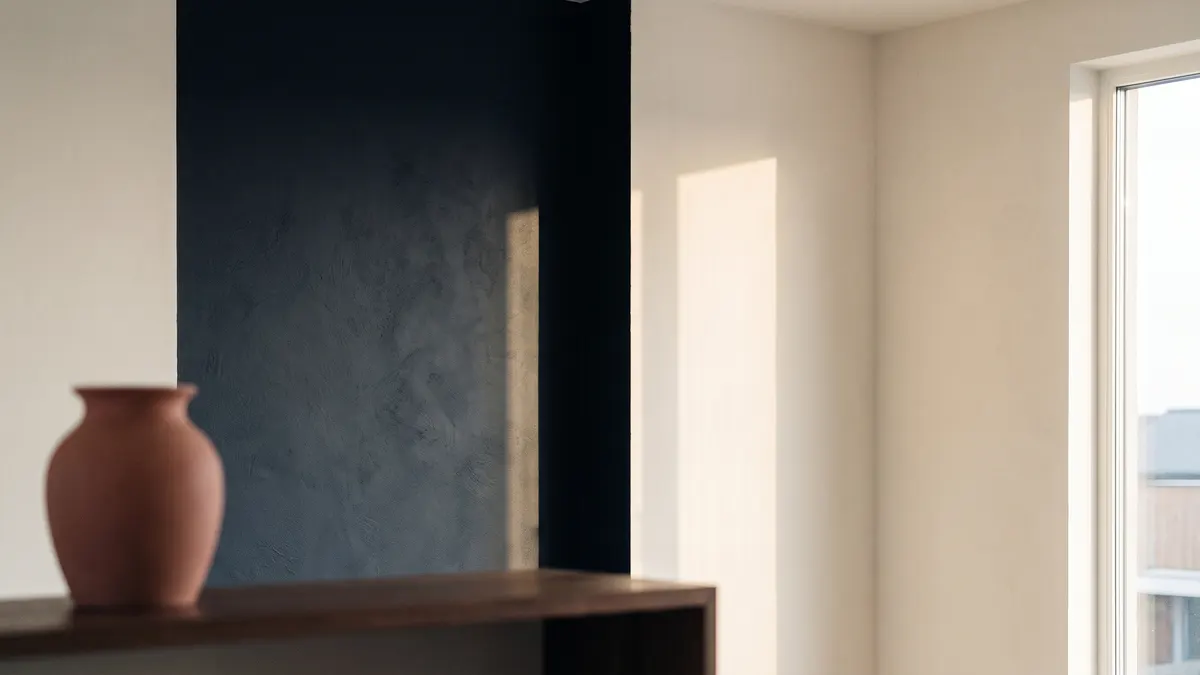
An accent wall works when it lands on the wall your eye already goes to — behind the bed, the fireplace wall, the wall you face walking in — and when its color ties to something else in the room. It becomes a mistake when it is put on a random wall, when it chops up an open floor plan that has no clear wall to end on, or when the chosen wall is broken up by doors and windows. In a lot of rooms the stronger move now is to paint the whole room one color, or to leave it alone, rather than add a single wall because it feels like a safe way to bring in color.
Planning interior painting in west metro Atlanta? Get a free written estimate.
Why one wall can carry a room
A good accent wall does a specific job: it gives the eye a place to land and adds depth without committing the whole room to a strong color. Done on the right wall, it makes a room feel intentional and a little richer, and it is a low-commitment way to bring in a color you would not want wrapping every wall.
That is the upside, and it is real. The problem is that the accent wall became a default — the thing people reach for whenever a room feels flat — and used that way, on the wrong wall or for the wrong reason, it does the opposite of what they wanted. Whether it works comes down to which wall and what color, not whether accent walls are a good idea in general.
Pick the wall the eye already chooses
The right accent wall is almost always the one your eye goes to on its own. In a bedroom that is the wall behind the headboard. In a living room it is the fireplace wall, or the wall you face when you walk in. These walls are already the focal point of the room, and color just confirms what the architecture is already saying.
Putting the accent on a random wall fights the room. If you color a side wall that is not where anyone naturally looks, you create a second focal point competing with the real one, and the room feels off without people being able to say why. The wall chooses itself more often than not — the job is to notice which one it is, not to pick a wall to be different.
When an accent wall is the wrong call
There are rooms where no accent wall is the right answer, and recognizing them saves you a repaint. The open floor plans in the area's newer homes are the main one: when the living, dining and kitchen areas flow together with no clear wall to stop on, an accent color lands in the middle of a continuous space and slices it awkwardly instead of framing anything.
The other common misfires are physical. A wall broken up by a doorway, two windows and a return has too little solid surface to read as a clean feature, so the color just looks busy. And in a small room, a dark accent wall can close the space down rather than add to it. Here is the honest version: sometimes the right advice is not to do it, and we would rather tell you that at the estimate visit than take the job and paint a wall you repaint in a year.
- Open-plan spaces with no clear wall to end the color on.
- A wall chopped up by doors, windows and openings, with little solid surface.
- Small rooms, where a dark accent can shrink the space.
- Choosing an accent wall only because a room feels flat, with no particular wall in mind.
Color is where good accent walls go wrong
Even on the right wall, the color decides whether it looks considered or bolted on. The accent should tie to something already in the room — a tone picked up from the furnishings, the floor or a fixed element — so it feels like part of the scheme rather than a stripe of unrelated color. An accent that matches nothing else reads as an afterthought.
Trend-chasing is the other trap. The accent wall colors that were everywhere a decade ago now date a room precisely, and painting one today in last season's feature color can make a fresh room look older than it is. A color that relates to the room you actually have ages better than one picked because it is the color of the moment.
The alternatives that often look better
When an accent wall is not the answer, there are usually two better moves. The first is to paint the whole room one color, including the trim and sometimes the ceiling — an approach that has largely replaced the single accent wall in current rooms because it feels enveloping and intentional rather than like a bright patch. A deeper color reads as a considered choice when it wraps the room instead of stopping at one corner.
The second is a clean two-tone done the honest way, like a deeper color below a picture rail or a painted built-in that has a reason to stand out. Both give a room depth and a focal point without the randomness that makes a bad accent wall look like a bad accent wall.
Does an accent wall add value to the house?
It is worth being straight about this, because the resale claim gets repeated a lot. An accent wall is a personal taste decision, not a measurable upgrade to the house, and a buyer who dislikes your feature color sees a wall to repaint, not added value. Color you chose for yourself is for you to enjoy, which is the right reason to do it.
If resale is genuinely the goal, a clean, consistent neutral through the main rooms is the safer read for a buyer than a bold accent wall. Do an accent wall because you want to live with it, on the wall that earns it — not because you have been told it adds value, because that part is not something anyone can promise you.
Questions we get asked
- Which wall should be the accent wall?
- The one your eye already goes to — behind the bed in a bedroom, the fireplace wall or the wall you face entering a living room. These are already the focal point, so color just reinforces it. An accent on a wall nobody naturally looks at competes with the real focal point.
- Are accent walls out of style?
- The single accent wall is used more carefully than it was, and in many rooms painting the whole room one color, trim included, has taken its place. An accent wall still works on the right wall with the right color — it is just no longer the automatic answer to a flat room.
- Can an accent wall make a small room look worse?
- It can. A dark accent in a small room can close the space down rather than add depth, and a wall broken up by doors and windows has too little solid surface to read cleanly. In those rooms a single whole-room color usually looks better.
- What color should an accent wall be?
- One that ties to something already in the room — a tone from the furnishings, the floor or a fixed element — so it reads as part of the scheme. Avoid picking the trend color of the moment, which tends to date the room faster than a color drawn from what is already there.
- Does an accent wall add resale value?
- No one can promise that. An accent wall is a personal taste choice, and a buyer who dislikes the color just sees a wall to repaint. If resale is the goal, a consistent neutral reads safer. Do an accent wall because you want to live with it, not for value.
Reviewed 2026-10-09 by Dan James, WS Painting & Remodeling LLC.