
Which home updates actually last, and which you redo
The updates that last are the ones built on a sound surface and the ones that fix a cause instead of covering it. Here is how to tell them apart before you spend.
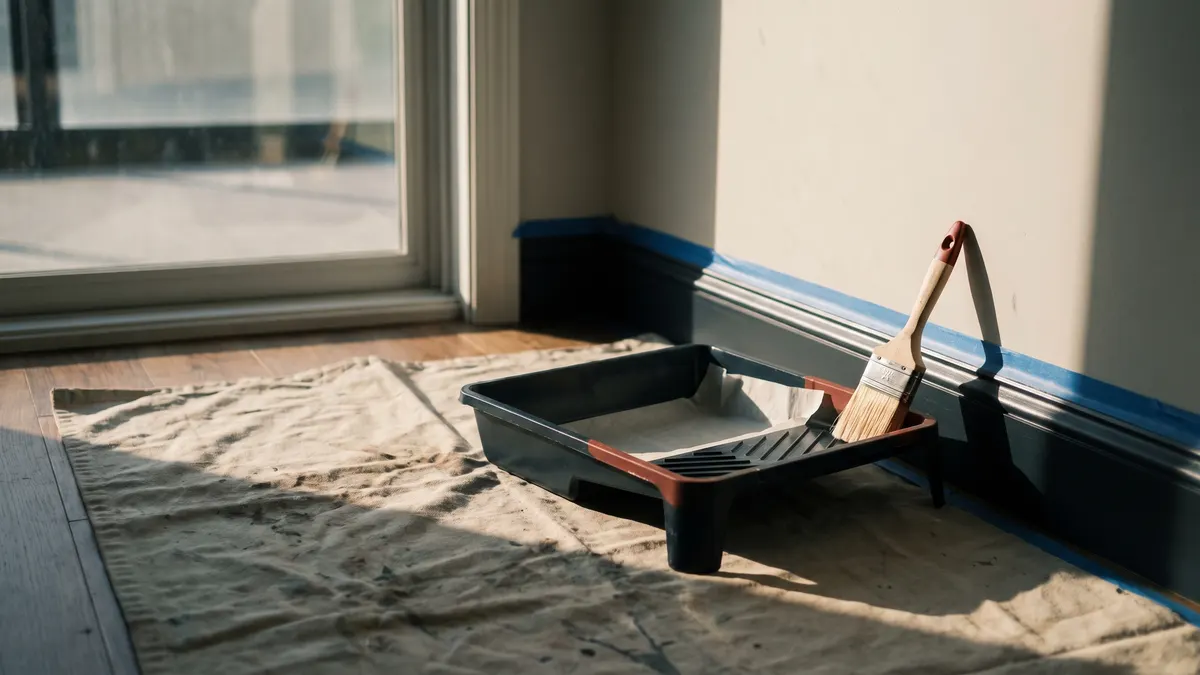
The updates that last are built on a sound surface with the right product for the room, and they fix a cause rather than cover it. A repaint over prepped, primed walls holds for years; the same paint rushed over dirty, glossy or unprepped patches fails early. Refinishing a solid cabinet box, a washable sheen in a kitchen or hallway, and recoating still-sound siding all earn their keep. What costs you twice is paint over a water stain nobody traced, a floor laid on a subfloor nobody flattened, or a patch nobody texture-matched.
Planning interior painting in west metro Atlanta? Get a free written estimate.
Lasting value is not the same as resale value
Most advice about home improvements talks about what an update returns at sale. That is a different question from whether the work still looks good in five years, and if you are staying in the house it is the wrong one to lead with. The question that actually protects your money is which projects hold up and which ones you end up doing again.
An update that fails early costs you twice: the redo plus the disruption of living through it a second time. On a west-metro house, the longest-lasting dollars are rarely the flashiest ones. They go into the parts of a job you stop seeing the day it is finished — the prep, the primer, the subfloor, the match — because that is what decides how long the part you do see stays right.
Paint lasts as long as the prep under it
A repaint is the single most cost-effective update to a tired room, but only the prep makes it last. Most of the labor in a good paint job happens before any color goes up: holes filled, cracked caulk cut out and redone, glossy trim scuffed so the new coat can grip, and a stain-blocking primer on every patch and water mark so it does not flash back through the finish.
Skip that and the paint fails exactly where it was never going to hold — at the patches, at the glossy trim, at the caulk lines. The paint line you choose matters less than whether the wall was ready for it. A quality finish over a surface nobody prepped is money spent on a coat you will be redoing while a properly prepped wall next to it still looks new.
Where a finish gives out first in this climate
Georgia humidity and sun are hard on finishes in predictable places, and the updates that last are the ones matched to that stress rather than fighting it. Knowing where things fail first is how you spend on the right finish instead of the cheapest one.
Inside, the high-touch, high-moisture rooms are where a flat builder-grade coat wears through — which is why kitchens, baths and hallways get a more washable sheen than bedrooms, and why a bathroom needs a mildew-resistant paint and an exhaust fan vented outside or the mildew just comes back. Outside, south and west exposures chalk and fade first, and horizontal wood like deck boards and railings takes the most sun and rain of anything on the property.
- Kitchens, baths and hallways: a washable sheen outlasts flat paint where hands, grease and cleaning hit the wall.
- Bathrooms: moisture-resistant paint plus a working vented fan, or mildew returns no matter the finish.
- Trim, crown and baseboards: humid summers open the caulk joints, so re-caulking is part of what makes a repaint last.
- South- and west-facing exterior walls, and all horizontal wood, give out before shaded and vertical surfaces do.
The updates that earn their keep
Some projects reliably return more life than they cost, and most of them are about keeping something sound rather than replacing it. The pattern is the same across trades: if the thing underneath is solid, restoring the surface lasts and costs far less than tearing it out.
- Refinishing or repainting cabinets when the boxes are sound and the layout works, instead of replacing the whole kitchen's casework.
- Recoating fiber cement or wood siding that is faded or chalked but still flat and firmly fastened — a paint problem, not a siding problem.
- Flattening and drying a subfloor before new flooring, which is the step cheap jobs skip and the reason they fail.
- Tracing and fixing the source of a water stain before any paint touches it, so the repair does not bleed back after the next rain.
What makes you pay twice
The cheap version of almost any job saves money by skipping the invisible part, and the invisible part is exactly where it fails. A water stain painted over without finding the leak seals for a while, then bleeds back when the next rain or the next leak hits. A floor laid over a base nobody checked for flatness and moisture cups, gaps or buckles within a season. A drywall patch over the wrong texture is flat and sound but still reads as a repair from across the room.
None of those are paint or product failures. They are prep failures, and they are the difference between an update you do once and one you do twice. When a quote comes in noticeably lower than the others, the honest question is which of these steps it left out — because that is usually where the gap went.
A simple test before you spend
Before you commit to any painting or finish project, ask two questions: what is underneath, and what caused the damage. If the surface is sound and whatever caused the wear has been addressed, almost any decent finish will last the years you expect from it.
If the surface is failing or the cause is still there, the finish is covering a problem, not fixing one, and the clock on the redo starts the day it goes up. Spending a little more to make the answer to both questions 'yes' is the most reliable way to get work that lasts — and the advice that most often talks a homeowner out of the bigger job we were asked to quote.
Questions we get asked
- Does more expensive paint actually last longer?
- A premium scrubbable finish can cover better and hold up longer in a high-wear room, but prep and the right sheen matter more than the price on the can. Good paint over an unprepped wall still fails early; mid-grade paint over a properly prepped, primed wall lasts. Spend on the prep first, then on the paint.
- Is refinishing cabinets really as durable as replacing them?
- When the boxes are solid and the layout works, a properly prepped and painted cabinet holds up well and costs far less than new casework. The durability comes from the prep — degreasing, sanding and the right primer and finish — not from the boxes being new. If the boxes are failing or the layout is wrong, replacement is the honest call.
- Should I repaint my siding or replace it?
- If the material is still sound and only the coating has faded or chalked, washing and recoating lasts and costs a fraction of re-siding. Replace when the material itself is failing — swollen, delaminating hardboard will not be saved by paint. Faded but sound siding is a paint project, not a siding project.
- How often will I really need to repaint?
- It depends far more on exposure and prep than on any fixed schedule. Interiors in normal rooms go a good while between repaints; kitchens, baths and hallways wear sooner. Outside, sun-hit walls and horizontal wood need attention before shaded, vertical surfaces. A well-prepped coat stretches every one of those intervals.
- What is the cheapest update that genuinely lasts?
- A quality repaint on well-prepped walls is usually the most lasting value for the money, because it refreshes a whole room without touching anything structural. The catch is the same every time: the value is in the prep. A rushed repaint is cheap twice over, because you pay for it again sooner than you planned.
Reviewed 2026-10-09 by Dan James, WS Painting & Remodeling LLC.