
Cheap remodeling changes that read as expensive
A room can look like it cost a fortune on a modest budget — but only if you spend on the right few things and avoid the shortcuts that give a cheap job away.
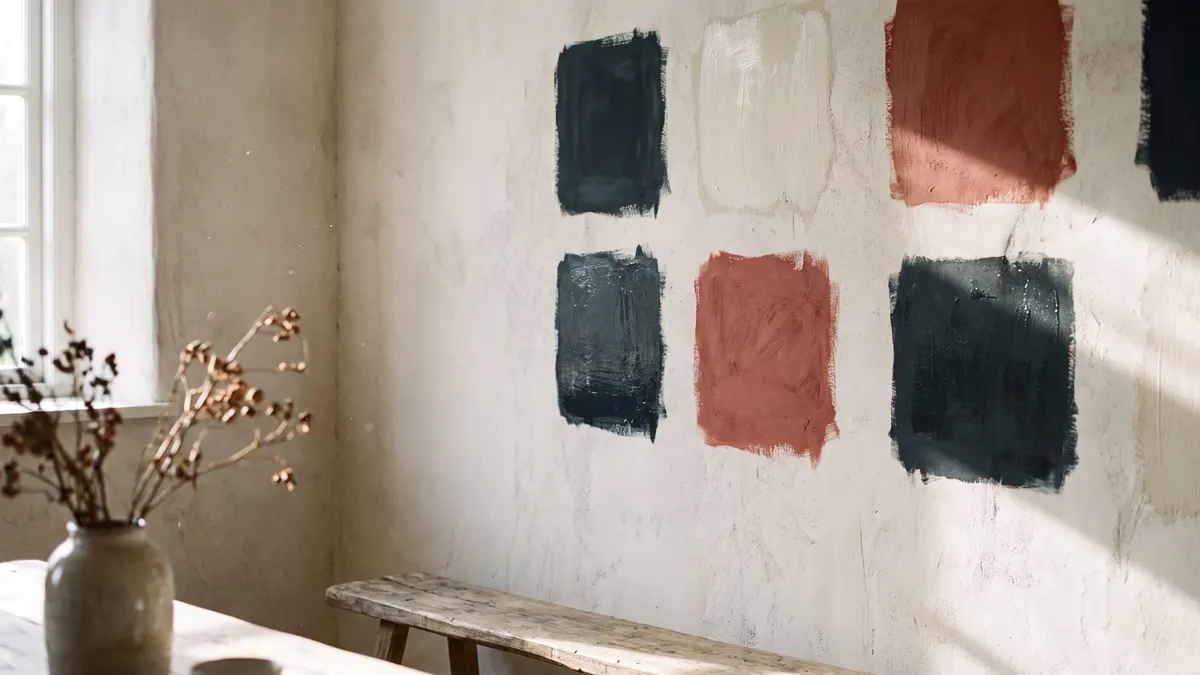
The affordable changes that read as expensive are the ones tied to finish quality: paint done with real prep, refinished cabinets instead of replaced ones, and swapped-out hardware, lighting and plumbing fixtures. The tell of a cheap job is not the budget — it is the shortcuts: skipped prep, peel-and-stick anything, high-gloss paint over unrepaired walls, and trim that is just stuck on. Spend on a few things done properly and a room reads as money. Spread the same money thin across shortcuts and it reads as cheap.
Planning interior painting in west metro Atlanta? Get a free written estimate.
Why paint is the cheapest move that reads as money
Paint is the highest-impact dollar in a house, and the reason is not the color — it is the prep. What makes a professionally painted room read as expensive is the work you do not see in the finished wall: holes filled flat, caulk lines cut out and redone, glossy trim scuffed so the new coat actually grips, and crisp, straight lines where the wall meets the ceiling and trim. That flawless, even surface is what the eye reads as quality.
A cheap paint job skips exactly those steps, and it shows immediately — roller marks, a wavy cut line, filler that telegraphs through the finish, patches that flash in the light. Same paint, same color, completely different result. The money in a good repaint is in the hours before the finish coat, which is also why it is the affordable upgrade that most reliably punches above its cost.
Color helps, of course — a current, cohesive palette carried through connected rooms makes a house feel considered rather than piecemeal. But color on a poorly prepped wall still looks cheap. Get the surface right first, and almost any sensible color will read well.
Make an old kitchen look new without new cabinets
Replacing kitchen cabinets is one of the biggest line items in the house. If the existing boxes are solid and the layout works, refinishing or repainting them gives you most of the visual change for a fraction of the cost — a point worth taking seriously before signing up for full replacement. A clean, well-prepped cabinet finish in a current color reads as a custom kitchen, not a budget fix.
The catch is that cabinet finishing lives or dies on prep, same as walls. Doors cleaned of years of kitchen grease, sanded so the new finish grips, and coated smoothly are what separate a refinish that looks factory-done from one that looks painted-over. Done right, it is one of the best-value moves in the whole house.
Pair that with the other cosmetic kitchen moves and the room reads as money without a gut remodel. New hardware. An updated backsplash. A countertop swap where the budget allows. None of these touch the plumbing or the layout, which is exactly why they stay affordable.
- Refinish or repaint sound cabinet boxes instead of replacing them.
- Swap dated hardware for a current finish across every door and drawer.
- Add or update the backsplash for texture and a finished look.
- Update the faucet and sink, which get looked at and touched constantly.
Bathrooms that feel upscale on very little
Bathrooms are small, which works in your favor on a budget — a few well-chosen updates change the whole room. A new mirror with better lighting, updated faucet and shower fixtures, fresh caulk at the tub and corners, and a moisture-resistant coat of paint can make a tired bathroom feel coordinated and clean without touching the tile or the layout.
The thing that drags a budget bathroom down is almost always neglect rather than cheapness: cracked, discolored caulk, a spotted old mirror, mismatched fixtures. Fixing those costs little and is what separates a room that looks refreshed from one that just looks older. A fresh bead of caulk alone can make a shower look years newer.
Keep the fixtures in one finish for the coordinated look. A matched faucet, shower trim, towel bars and light is what reads as intentional; a mix of leftover finishes is what reads as make-do, no matter how new the pieces are.
The small swaps that punch above their price
A handful of low-cost changes read as far more expensive than they are, because they replace the generic, builder-grade parts that quietly signal 'basic' throughout a house. Updated lighting is the clearest: trading a flush builder fixture for current pendants, a modern flush mount, or recessed cans changes how a whole room feels and works.
Hardware and trim do the same quiet work. Current cabinet pulls, door handles and faucets in a consistent finish tie rooms together. Real trim — a proper baseboard, window casing, or crown — adds the kind of detail people read as custom, as long as it is installed and finished properly rather than tacked on.
Consistent flooring is the bigger-ticket version of the same idea. Running one floor across connected rooms, instead of a patchwork of surfaces that change at every doorway, makes the whole level read as larger and more deliberate — one of the few moves that affects the whole floor at once.
- Replace builder-grade light fixtures with current ones, matched room to room.
- Carry one hardware finish through the space instead of a mix of leftovers.
- Add substantial baseboard, casing or crown where the walls look bare.
- Run one consistent floor across connected rooms for a continuous look.
The moves that look cheap no matter what they cost
Just as some inexpensive work reads as money, some work reads as cheap regardless of the price tag — and avoiding it matters as much as choosing the right upgrades. Peel-and-stick products are the usual culprits: stick-on tile, stick-on trim, stick-on flooring over a bad subfloor. They look like what they are within a year, and they often cost you more later when they have to come off.
The other giveaways are shortcuts on the fundamentals. High-gloss paint over walls that were never repaired shows every flaw. Trim that is glued up instead of properly installed. An undersized rug floating in the middle of a room. A finish rushed on without prep. These are what make a space feel cheap, and they are entirely avoidable.
The pattern underneath all of them is skipping the preparation to save a day. The finished surface records that skipped day permanently, which is why the shortcut almost never actually saves anything.
A few things done well beats many done fast
The instinct on a tight budget is to spread the money across as many small projects as possible. More often, the opposite gives the better-looking result: pick a few changes and do them properly rather than many done quickly.
A well-prepped paint job, one consistent set of hardware, and lighting that actually suits the room will make a house feel considered. A dozen half-finished shortcuts will not, no matter how much ground they cover. Quality in the few things that get looked at every day is what reads as expensive — and it is usually the cheaper path over time, because you are not redoing it.
If the budget only stretches to one room done right or three done halfway, do the one. A single finished, polished space resets how the whole house feels more than a scattering of unfinished ones, and it gives you a standard to match when the next budget comes around.
Questions we get asked
- What is the single cheapest change with the biggest visual impact?
- Paint, done with full prep. The color is the easy part; the filled, repaired, crisply cut surface underneath is what reads as quality. It is the most affordable upgrade that reliably makes a room look like it cost more than it did.
- Should I repaint my cabinets or replace them?
- If the boxes are solid and the layout works, refinishing or repainting gives most of the visual change for far less than replacement. Replace when the boxes are failing or the layout itself is the problem — paint cannot fix a kitchen that does not function.
- Does luxury vinyl plank look cheap compared with hardwood?
- Not when it is a quality product installed over a properly prepared subfloor — it reads as a clean, consistent floor. What looks cheap is a thin product laid over an uneven or unaddressed base, where it flexes, gaps and telegraphs every flaw underneath.
- Do I need a professional for the finish to look expensive?
- For the work where prep is the whole game — paint, cabinet refinishing, trim, tile — the difference between a pro result and a rushed one is exactly what the eye reads as expensive or cheap. Simpler swaps like hardware are reasonable to do yourself.
- Which affordable upgrades should I actually avoid?
- The peel-and-stick shortcuts — stick-on tile, trim and flooring — and any finish rushed on without prep. They announce themselves within a year and often cost more to undo than they saved. Spend a little less ground but do it properly.
Reviewed 2026-10-09 by Dan James, WS Painting & Remodeling LLC.