
The greenest hardwood floor is the one already in your house
Refinishing usually beats replacing: how many times a floor can be sanded, when it is genuinely done, and what sustainable really means in wood.
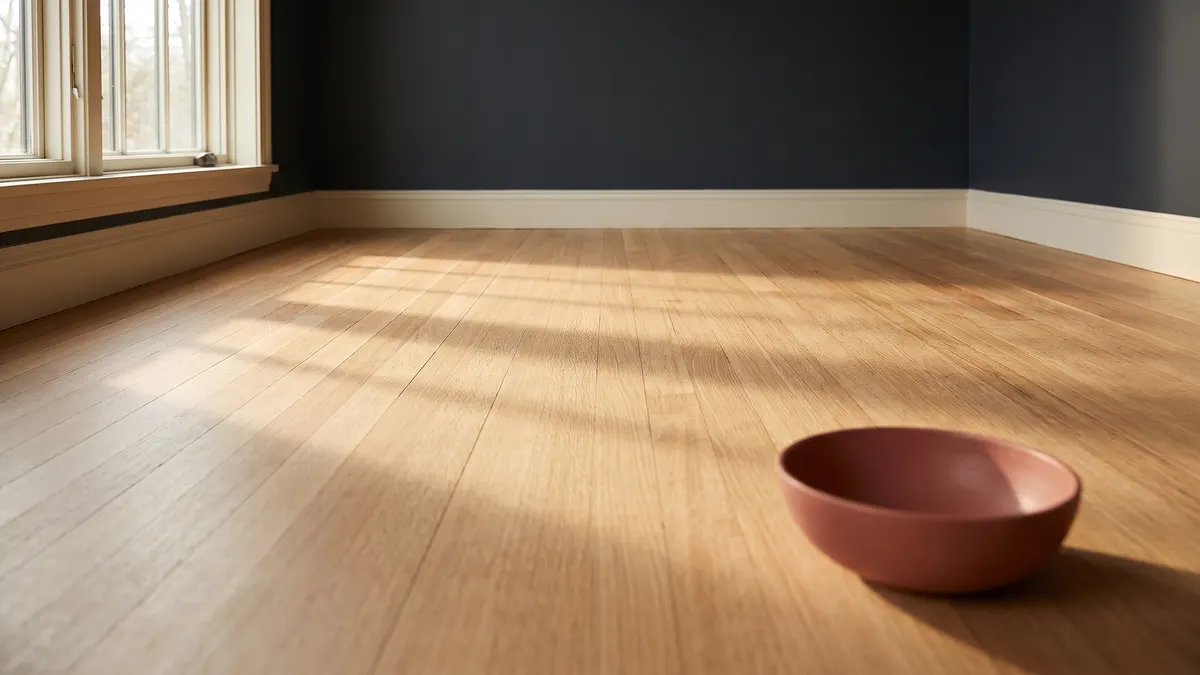
The most sustainable hardwood floor is almost always the one already in the house — refinishing solid oak keeps old-growth wood out of the landfill and costs far less than tearing it out. Solid hardwood can be sanded and refinished several times over its life, so a scratched, dated or dull floor is usually a refinishing job rather than a replacement. Replace it only when the wood is too thin from past sandings, water-damaged through, or rotted, at which point new or reclaimed wood is the honest call.
Planning flooring installation in west metro Atlanta? Get a free written estimate.
Refinishing beats replacing most of the time
A tired-looking hardwood floor is rarely a worn-out floor. Scratches, dullness, dated stain color and surface wear all live in the finish and the top sliver of the wood, which is exactly what sanding removes. Refinishing takes the floor back to bare wood and puts a fresh finish on, and it can change the color while it is at it — all without tearing out a single board.
That is the cheaper outcome and the lower-waste one. You keep the wood, skip the demolition and disposal, and avoid buying a whole new floor to solve a problem that was only ever skin-deep. Around Atlanta and Marietta, where a lot of the housing stock has real oak in it, refinishing is the default answer far more often than replacement.
How many times a floor can be refinished
The reason this works is that solid hardwood has wood to spare. A solid board has a usable thickness above its tongue that allows for several full sand-and-refinish cycles across its life — often decades apart. A floor that has only been refinished once or twice has plenty left, which is why a 60-year-old oak floor is frequently still a candidate.
Engineered wood is the exception, and it matters to know which you have before anyone sands. Engineered flooring is a thin layer of real wood over a stable core, and that wear layer only allows a light refinish at most — sometimes none. Sand an engineered floor like a solid one and you go straight through the veneer into the core, and then it genuinely does need replacing.
When wood is genuinely past saving
There is a point where replacement is the honest answer, and it is worth being straight about it. A solid floor that has been sanded so many times the nail heads or the tongues are showing has no more life to give. Boards that are black through the grain from water, soft or springy from rot, or burned and gouged past the depth of a sanding are also done.
In those cases the damaged boards are replaced and woven in where the problem is local, or the floor is replaced where it is widespread. The skill is telling the difference — a floor that looks ruined on the surface is often just dirty and worn, while one that looks passable can be too thin to touch. That read is what decides refinish versus replace, not how bad it looks at a glance.
What sustainable actually means in a wood floor
The biggest environmental win in flooring is not a product you buy — it is keeping the wood that is already down. Every refinished floor is one that did not get landfilled and one new floor that did not have to be manufactured and shipped. After that, the choices that genuinely reduce impact are responsibly sourced or reclaimed wood, and low-VOC, water-based finishes that cure with far less odor and off-gassing than the old oil-based products.
Engineered flooring has a smaller claim here too: it uses a thin slice of the slow-growing hardwood species over a core of faster-grown material, so a given tree covers more floor. None of that outweighs the simplest move, which is refinishing sound wood instead of replacing it.
Living with a wood floor in Georgia humidity
A refinished floor still has to live in this climate, and wood responds to the air around it. Our humid summers and dry, heated winters make the boards take on and give up moisture through the year, which is normal — the trouble only starts when the swings are extreme or a moisture source sits under the floor. Keeping the house conditioned, running a dehumidifier through the worst of summer, and keeping standing water off the floor are what keep a good floor flat and gap-free.
Day to day the maintenance is undramatic: sweep the grit that scratches, use felt pads under furniture, clean with a product made for wood rather than a wet mop, and deal with spills quickly. Treated that way, a refinished oak floor goes years before it wants attention again, which is the whole case for saving the wood in the first place.
Questions we get asked
- Can my old hardwood floors be refinished or should I replace them?
- Most sound solid floors can be refinished, even ones that look rough — surface scratches, dull finish and dated color all sand away. Replacement is only necessary when the wood is sanded too thin, water-black through the grain, or rotted. An in-person look at the board thickness and condition is what settles it.
- How many times can hardwood be refinished?
- A solid hardwood floor can usually take several full refinishes over its life, depending on how much wood sits above the tongue and how it has been sanded before. That is why floors many decades old are still refinishable. The limit is physical — once there is no sound wood left above the tongue, it is done.
- Can engineered wood be refinished?
- Only lightly, and sometimes not at all. Engineered flooring has a thin real-wood wear layer over a core, and a full sanding cuts through it into the core and ruins the board. It is important to know which type you have before sanding, because treating engineered wood like solid wood destroys it.
- Are water-based finishes better?
- They are the lower-odor, lower-VOC choice and they cure faster, which is why they have largely replaced the old oil-based finishes for refinishing work. They are also durable. Oil-based finishes amber the wood more over time, so the choice is partly about color as well as fumes and cure time.
- How do I keep hardwood from cupping in Georgia summers?
- Control the moisture. Cupping comes from the boards taking on more humidity underneath than on top, so keep the house conditioned, run a dehumidifier in peak summer, make sure a crawlspace or slab under the floor is dry, and clean up standing water quickly. Stable indoor humidity is what keeps a wood floor flat.
Reviewed 2026-10-09 by Dan James, WS Painting & Remodeling LLC.