
Before you install hardwood: it is decided under the floor
The wood you pick matters less than what is under it: flatness, moisture, and letting the boards acclimate before they are fastened down.
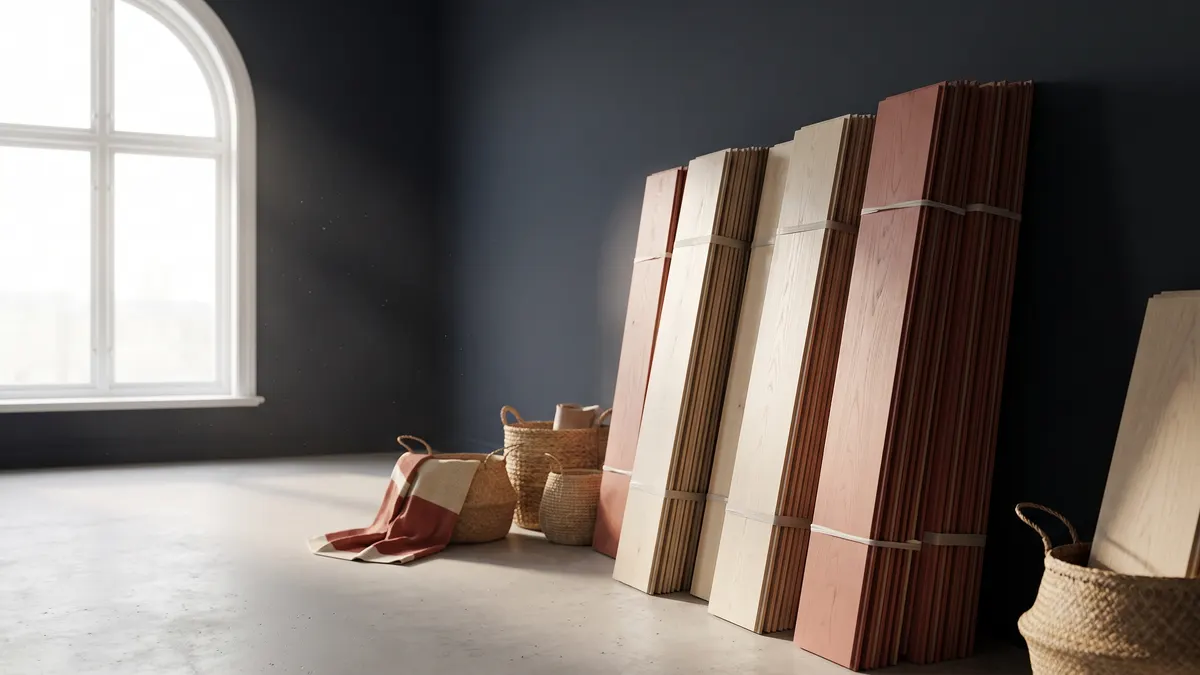
The subfloor decides whether a hardwood floor succeeds, not the species you pick — its flatness, how dry it is, and letting the wood acclimate to the house before it is fastened down. Solid hardwood goes over a dry wood subfloor; over a concrete slab or above a damp crawlspace you test the moisture first and often choose engineered instead. Wood installed before it has settled to the home's own humidity will cup, gap or buckle no matter how good the boards were.
Planning flooring installation in west metro Atlanta? Get a free written estimate.
Solid or engineered depends on what is under the room
The first decision is not a look, it is a location. Solid hardwood is milled from one piece of wood and can be sanded and refinished many times, but it wants a dry wood subfloor — a main floor over a crawlspace, or an upstairs. Engineered hardwood is a real wood wear layer over a plywood-style core that holds its shape through moisture swings, which is what lets it go down over a concrete slab or in a basement.
West-metro homes come both ways. The mid-century houses around Smyrna and Marietta are typically on crawlspaces, where solid wood is at home. The 1990s-and-newer subdivisions around Powder Springs and Kennesaw are often slab-on-grade, where engineered over the slab is usually the safer call. The house, not the catalog, picks the product.
Moisture is the thing that wrecks wood floors
Wood is never finished moving. It takes on moisture from humid air and gives it back in dry air, and Georgia swings hard from humid summers to dry, heated winters. That movement is normal and designed for — unless there is a second, hidden moisture source feeding the floor from below.
Over a slab, moisture wicks up through concrete, which looks and feels dry but is not; the slab has to be moisture-tested and sealed, and the wrong adhesive or a missing vapor barrier will cup the floor from underneath. Over a crawlspace, a damp, unsealed crawl does the same thing — the floor cups because the bottom of the boards is drinking humidity the top never sees. Fixing the moisture under the floor is part of the floor job, not a separate one.
Acclimation: the wood has to sit in the house first
Flooring should not arrive on the truck and go straight down. It needs to sit in the room it will live in, with the heating and cooling running at normal levels, until it reaches the home's own humidity — typically several days, longer for some products. This is acclimation, and it is the step most rushed installs skip.
Skip it and the physics are unforgiving. Boards installed wetter than the house will shrink and leave gaps between every plank through the first winter; boards installed drier than the house will swell and cup or buckle. The wood is going to reach the home's humidity either way — acclimation just lets it do that before it is fastened down instead of after.
Flatness and prep are where the job is won
A subfloor has to be flat, clean, dry and solidly fastened before a board goes down. High and low spots telegraph through the finished floor as hollow-sounding, flexing or squeaking areas, and they put uneven stress on the joints. Flattening the subfloor, refastening it to kill squeaks, and clearing it is unglamorous work nobody sees once the floor is in — and it is exactly what separates a floor that feels solid from one that is noisy underfoot.
Over a slab the same two things, flatness and moisture, both have to be right. A slab can be dead flat and too damp, or dry and too wavy; the floor needs both solved. This is the part of the project worth the most attention, and worth having checked before you buy, because it is the part you cannot fix later without pulling the floor.
Site-finished or prefinished: an honest tradeoff
Site-finished floors are installed raw, then sanded, stained and sealed in place. You get a continuous surface with no micro-grooves between boards and an exact color and sheen, at the cost of dust, fumes and several days of cure time before the room is usable. Prefinished floors arrive sealed with a tough factory aluminum-oxide finish and go in faster with no in-home finishing, but carry small beveled edges at every board and a color you choose off a sample rather than mix on site.
Neither is simply better. A prefinished floor is a fine, durable choice in a busy house; a site-finished floor is the move when it has to match existing wood or when a smooth, bevel-free surface matters to you.
Think of it as a system: under before over
The boards are the visible half of a hardwood floor and the smaller half of the work. Species, color and width are real choices, but they ride on moisture testing, acclimation, subfloor flatness and the right install method for what is beneath. Get the under-floor right and a modest wood floor performs for decades; get it wrong and the best boards in the catalog cup, gap or lift.
Questions we get asked
- Can I put solid hardwood over a concrete slab?
- It is risky. Concrete passes moisture up into wood even when it feels dry, which can cup a solid floor. Over a slab, engineered hardwood installed after the slab is moisture-tested is the safer choice; solid wood over slab only makes sense with proven-low moisture and the right system under it.
- How long does hardwood need to acclimate?
- Typically several days in the actual room with the HVAC running at normal levels, and longer for some products — the goal is a moisture level, not a date on the calendar. The point is to let the wood reach the home's humidity before it is fastened down so it does not move hard afterward.
- Why would a brand-new hardwood floor cup or gap?
- Moisture and skipped acclimation. Gaps open when boards were installed wetter than the house and then shrank; cupping happens when the boards take on moisture from below — a damp slab or crawlspace — or were installed too dry. The wood is almost never the problem; the conditions under and around it are.
- Do I need to fix my crawlspace before installing hardwood?
- If it is damp, yes. A wet, unsealed crawlspace feeds humidity into the underside of the floor and cups it over time. Addressing the crawlspace moisture is part of giving a wood floor a dry foundation to sit on, not an optional extra.
- Site-finished or prefinished — which is better?
- Neither universally. Prefinished is faster, lower-mess and very durable but has beveled board edges; site-finished gives a smooth, continuous surface and an exact color match at the cost of dust and cure time. The right one depends on whether matching existing wood and a bevel-free surface matter to you.
Reviewed 2026-10-09 by Dan James, WS Painting & Remodeling LLC.