
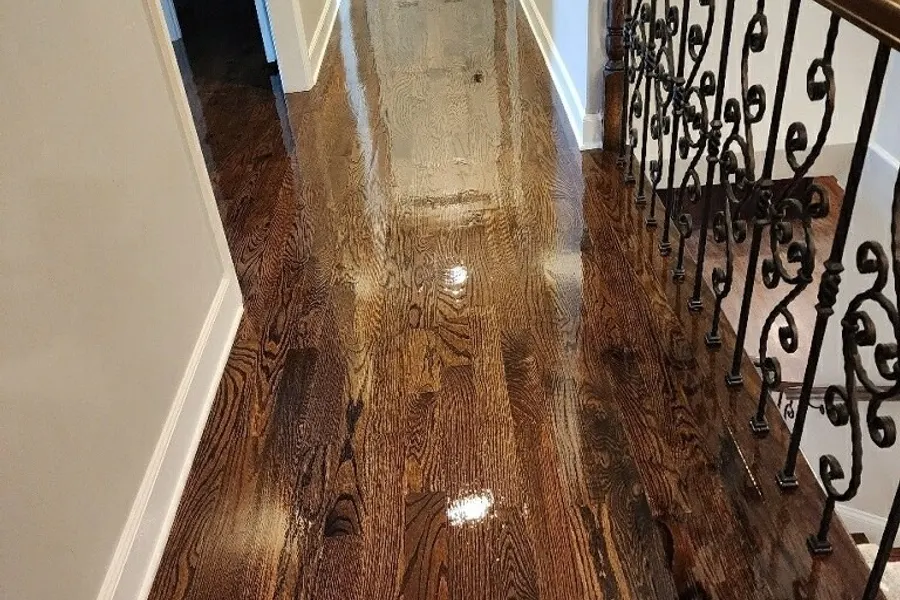
Flooring Installation in Lithia Springs, GA
Lithia Springs sits about fifteen minutes south of the shop, just off I-20, close enough that a multi-day exterior stays on schedule without the drive eating the morning. Its housing mix — a mid-century ranch core near the old mineral springs plus 1990s and 2000s subdivisions out toward the interstate — is the same stock the crews already paint at home base, so there is no learning curve on what a four-sided brick ranch or a builder-sided subdivision house needs in prep.
Douglas County · about 15 minutes from our Powder Springs shop
Flooring Installation for Lithia Springs homes
A post-war core of four-sided brick ranches and Minimal Traditional cottages from the 1940s and 50s sits near the old springs, with 1990s and 2000s subdivisions filling in along the Highway 78 and I-20 corridor. The mid-century homes are prep-heavy painting work: single-pane wood sash that needs reglazing, chalking on decades-old painted brick, and pre-1978 coatings on trim and eaves that have to be sanded and contained before any topcoat goes on. The newer corridor stock is hitting its first real repaint cycle, with builder-grade siding and failed caulk lines driving the exterior work.
Areas we work in Lithia Springs
- Anna Bella Estates
- Oak Hill
- Whitaker Hills
- Sweetbriar
- Fairhaven
Near Sweetwater Creek State Park, New Manchester Mill ruins, George Sparks Reservoir and across the rest of Lithia Springs.
Flooring Installation on Lithia Springs houses
Lithia Springs runs from a post-war core of four-sided brick ranches and Minimal Traditional cottages near the old springs to 1990s and 2000s subdivisions along the Highway 78 and I-20 corridor, and the two ask for different flooring work. The mid-century homes sit on slab or crawlspace and often have original hardwood under decades of carpet that is worth refinishing rather than covering. They can also carry pre-1978 sheet vinyl over the slab whose adhesive may contain asbestos and has to be tested before removal. The newer corridor stock is builder carpet over a plywood subfloor, a straight replacement decision. Proximity to the creek and springs means a moisture check on slabs and in crawlspaces is not optional here.
What usually gets missed
The miss on the mid-century stock is covering sound original hardwood with new vinyl because carpet came up over it — a sand and refinish usually costs less and lasts far longer. The second is moisture: a slab or crawlspace near the springs that reads damp will buckle wood and release glued vinyl, and that has to be found before material is ordered, not after it cups. The third is ripping up old resilient flooring in a pre-1978 ranch without testing the adhesive, which can spread asbestos. All three are decided by what the crew finds under the existing floor.
On a Lithia Springs job we check
- Check under the carpet for original hardwood worth refinishing
- Moisture-test slabs and crawlspaces given the nearby creek and springs
- Test pre-1978 sheet vinyl and adhesive before pulling it up
What the job actually involves
A floor is only as good as what it sits on. Most of a flooring job is the part you never see — checking the subfloor for flatness, moisture and movement, and fixing it — because that is what decides whether the finished floor stays flat, quiet and tight instead of cupping, gapping or squeaking in a year or two.
We install laminate, luxury vinyl plank, engineered and solid hardwood, and tile, matched to the room: vinyl or tile over slabs, basements and wet areas, hardwood in conditioned living space, with the underlayment and transitions the material calls for. We do not pair a good floor with the thinnest underlayment to shave the quote, because that is where noise and early wear come from.
How we run a flooring installation job in Lithia Springs
- 1
Pull back a corner and see what is really there
Before anything is ordered we lift a corner of the existing carpet or flooring to see the subfloor, the height against the next room, and whether the house is on a slab or a crawlspace. What is under the floor, not the sample in the showroom, decides what can go down and what prep it needs.
- 2
Test for moisture and check the subfloor
Slabs and crawlspace subfloors are checked for moisture before any wood or vinyl is committed, because flooring laid over a wet base fails no matter how well it is installed. We also check the subfloor for flatness and for loose, soft or squeaking spots, and note the height difference into every adjoining room.
- 3
Fix and flatten the subfloor
High and low spots are ground down or filled with leveling compound, loose panels are refastened to the joists, and soft or water-damaged decking is cut out and replaced. On a crawlspace house a ground vapor barrier is part of keeping the new floor dry. This step is skipped on cheap jobs and is the reason they fail.
- 4
Acclimate the material
Wood and some vinyl are brought into the actual rooms and left to reach the home humidity before a board goes down. In a Georgia summer that matters: material installed straight off the truck swells or shrinks to the room later and opens gaps or buckles. We measure it rather than guess.
- 5
Lay the floor and handle transitions
The floor goes down by the method the material calls for — nail, glue, or floating click — with the right underlayment under it. Thresholds and transitions into tile, other rooms and stair nosings are cut so there is no trip edge, and doors are undercut so they still swing.
- 6
Trim, clean and walk it
Shoe molding or base is set to cover the expansion gap, seams and transitions are checked, and the floor is cleaned. We walk it with you in good light, looking for lifted edges, hollow spots and anything that catches, and work a punch list before it is closed out.
What moves the price
We will not quote Lithia Springs blind over the phone — these are the things we look at on site that decide the number.
- What is under the existing floor. Carpet over sound plywood pulls up easily; tile or glued vinyl, or a bad subfloor found underneath, adds removal and prep that a showroom quote never includes.
- Material class. Laminate and vinyl plank sit at the low end, engineered hardwood and tile in the middle, and solid site-finished hardwood or natural stone at the top.
- Subfloor repair and leveling. Grinding high spots, filling low ones, replacing soft decking, or adding a crawlspace vapor barrier is priced once the old floor is up.
- Slab versus crawlspace. A slab limits solid hardwood and may need moisture control; a crawlspace can need subfloor and vapor work before new flooring goes down.
- Square footage, and how cut-up the space is. Closets, angles, stairs and lots of doorways slow a job and add transitions and waste.
- Stairs, patterns and transitions. Stair treads, diagonal or herringbone tile, and tying several finishes together at thresholds all add labor over a plain straight-lay field.
From a flooring installation customer
“We’ve been working with WS Painting and Remodeling after two leaks in our home, and they’ve been fantastic. … The quality of their work has been outstanding and made a stressful situation much easier.”
Leak repairs
Want a real number for your Lithia Springs flooring installation job?
The only way to price it honestly is to see it. We come out, walk the job and put it in writing — free, and with no obligation to book.
Call and we answer 24/7. Forms sent during the day get a call back the same day.
Flooring Installation in Lithia Springs — questions we get asked
- What is the most important part of a flooring job?
- The subfloor. A floor fails from underneath — a lump telegraphs through vinyl, a low spot leaves a hollow that cracks tile grout, and a wet slab buckles wood. We spend real time flattening, drying and securing what is under the floor, because the finish only lasts if the base is right.
- Should I replace my old hardwood or refinish it?
- If the existing wood is solid and thick enough to sand, refinishing almost always costs less and lasts longer than covering it with new flooring. We check the boards before you spend money replacing something that only needs sanding and a new finish. Covering good hardwood with vinyl is usually the wrong call.
- Can I put hardwood on a concrete slab?
- Engineered hardwood can go over a slab once it passes a moisture test, because its layered construction handles the moisture concrete gives off. Solid hardwood cannot be fastened to concrete directly; it needs a wood subfloor or sleepers built over the slab first, which raises the floor and adds cost. On a slab, engineered or vinyl is usually the better call.
- Which floor holds up best in Georgia humidity?
- Vinyl plank and tile do not care about humidity and are the safe choice over slabs, in basements and in wet areas. Engineered hardwood is stable enough for most of the house. Solid hardwood is fine in conditioned rooms over a wood subfloor but moves the most with the seasons, so it needs the acclimation and gaps done right.
- How long does new flooring take?
- A single room is often a day or two. A main level is usually several days, more if the old floor fights coming up, the subfloor needs repair, or wood has to acclimate first. Tile adds time for mortar and grout to cure. We give you a schedule after we see what is under the existing floor.
Planning flooring installation? Start here
- The greenest hardwood floor is the one already in your house Refinishing usually beats replacing: how many times a floor can be sanded, when it is genuinely done, and what sustainable really means in wood.
- Before you install hardwood: it is decided under the floor The wood you pick matters less than what is under it: flatness, moisture, and letting the boards acclimate before they are fastened down.
- The best flooring depends on one thing: the room No material wins every room. The deciding factor is moisture — what is under the room and what gets it wet.
More in Lithia Springs
Douglas County housing, neighborhoods and what we do there.
Painting & remodeling in Lithia Springs →Other work in Lithia Springs
Prefer to talk it through? Dan picks up.
(470) 419-0922