
Exterior remodeling: when to repaint and when to replace
Upgrading an exterior is a choice between coating what is sound and replacing what is failing — and getting that call right is what separates an upgrade that lasts from one that only hides the problem.
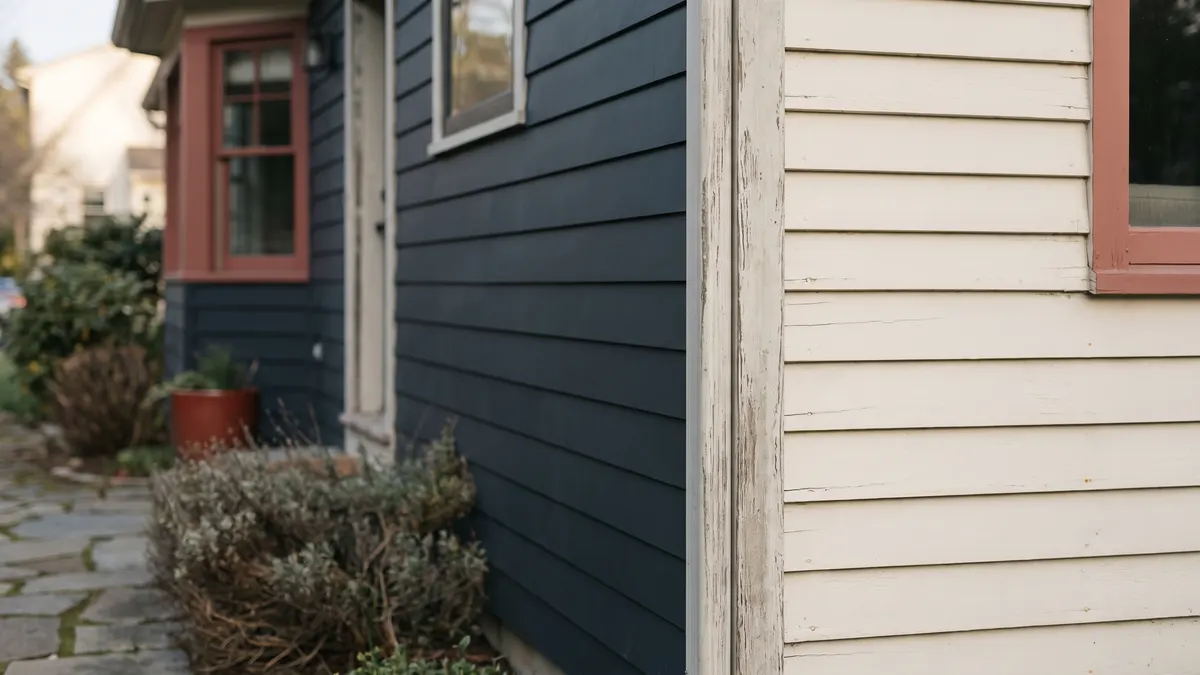
Upgrading a home's exterior comes down to one honest question: is the material sound enough to coat, or is it failing and in need of replacement? A repaint or re-stain transforms the look of siding, trim and decking that is still structurally sound, and it is the better value every time the surface can carry a finish. But paint over swollen, delaminating hardboard or rotted deck boards is money burned — it hides the failure for a season and comes back worse. The upgrade that actually lasts starts by sorting what can be refreshed from what has to be replaced.
Planning siding replacement in west metro Atlanta? Get a free written estimate.
Two different jobs under one name
Exterior remodeling covers two very different kinds of work, and treating them as one is how budgets get wasted. The first is refreshing sound material — repainting siding and trim, re-staining a deck, updating the entry — which changes how the house looks without touching what it is made of. The second is replacing material that has reached the end of its life — failing siding, rotted decking, soft trim — which is carpentry, not coating. Knowing which one a given surface needs is the whole decision.
The mistake that costs the most is doing the first when the house needs the second: spending a refresh budget on a surface that is actually failing. It looks like an upgrade for a season and then fails along with the material underneath. The honest starting point for any exterior upgrade is sorting the sound from the failed.
When a refresh is the right upgrade
If the material is sound, a finish is almost always the better value, and it does more for appearance than its cost suggests. Siding and trim that are faded or chalked but still flat, firm and firmly fastened do not need replacing — they need washing, priming where the coating has worn through, and repainting. A deck whose boards are solid but gray needs cleaning and re-staining, not rebuilding. In both cases the material has life left, and a finish restores both the look and the protection.
This is the common, happy case on a lot of west-metro houses: the surfaces look tired but are fundamentally sound, and a proper repaint or re-stain transforms the house for far less than replacement. Paying to replace sound material because it looks dull is paying to solve a problem a finish already solves.
When the material is past coating
Replacement becomes the honest answer when the failure is in the material itself, not just the finish. Builder-grade hardboard that has swollen and delaminated at the butt joints and the bottom course — a common failure across the 1980s and 90s subdivisions here, where Georgia humidity works on it relentlessly — is at the end of its service life, and no coat of paint stays flat and bonded over a board that is coming apart. Deck boards that are soft, splitting or rotten are the same story. Paint or stain over them is money burned.
The tell is usually repetition and moisture. If the same surfaces have needed attention again and again, or if there are soft spots you can push a screwdriver into and staining that keeps returning, the material is aging out. At that point a finish is not an upgrade; it is a disguise that comes off with the next season.
Siding: refresh, re-side one elevation, or replace
When siding is the question, the decision has a middle option people miss. Sound siding gets repainted. Failing siding gets replaced. But when only part of a wall or one elevation has failed, the practical path is sometimes to re-side that elevation rather than patch it — especially since siding profiles get discontinued, and a patch that is structurally perfect still reads as a patch when the new boards sit differently in the light next to faded originals.
On the common local layout — a brick front with sided gables and a sided rear wall — that often means replacing the siding on the gables and back while the brick front stays as it is. The goal is an exterior that reads as one house, not a map of patches, which is why a siding upgrade is planned by elevation and by what can be matched, not just by counting bad boards.
Decks and porches: re-stain or rebuild
A deck is the exterior upgrade where the coat-versus-replace line is easiest to see, because you can walk on the evidence. A deck with solid, well-fastened boards that has simply gone gray is a cleaning and re-staining job, and the result both looks new and re-seals the wood against the rain that would otherwise destroy it. In this climate, keeping a sound deck sealed is what keeps it sound.
A deck with soft, cupped or splitting boards, loose fasteners or any give in the structure is a different project. Surface boards can sometimes be replaced over a sound frame; a frame that is failing is a rebuild. The honest rule is that stain protects sound wood and hides nothing — re-staining a deck that is structurally failing spends money on a surface that needs to come out.
Sequencing an exterior upgrade
An exterior upgrade that lasts goes in a specific order, and skipping to the finish is the expensive shortcut. First, find and fix the source of any water problem — the overflowing gutter, the failed flashing, the grade pushing moisture at the siding — because nothing installed or coated over an active leak survives. Next, replace the material that has failed. Only then does the refresh go on: the paint, the stain, the new entry details that make the house look upgraded.
Done in that order, the money buys a result that both looks new and is sound underneath, and the house ends up as one consistent exterior rather than a patchwork. A proper assessment up front — what is sound, what is failing, where the water is coming from — is what keeps an exterior upgrade from becoming a repaint you pay for twice.
Questions we get asked
- Can I just paint over bad siding to save money?
- No — it is the one exterior decision that reliably wastes money. Paint over hardboard that has swollen and delaminated, or over rotted trim, hides the failure for a season and comes back worse, because the water is already in the material. Sound siding gets painted; failing siding gets replaced. There is no coat that turns the second into the first.
- How do I tell sound siding from siding that is failing?
- Sound siding is flat, firm and firmly fastened — faded or chalked is fine, that is a paint problem. Failing siding swells and delaminates at the joints and bottom course, feels soft, and shows staining that keeps returning after painting. If the same walls have needed attention repeatedly, the material is aging out rather than just looking tired.
- If I re-side only one elevation, will it match the rest?
- The new material will not match faded, decades-old siding exactly, and discontinued profiles can make a mid-wall patch obvious. That is why a failing section is often handled by re-siding a whole elevation, so the change lands at a corner rather than in the middle of a wall. On a brick-front house that usually means the gables and rear, leaving the brick alone.
- Should I replace my deck or just re-stain it?
- Re-stain if the boards and frame are sound and the deck has only gone gray — cleaning and refinishing restores the look and reseals the wood. Replace when boards are soft, splitting or the structure has give; stain over a failing deck just delays the rebuild. Sometimes surface boards can be replaced over a sound frame, which is a middle path worth asking about.
- What should I fix first in an exterior upgrade?
- The source of any water problem — a leaking gutter, failed flashing, or grade and mulch pushing moisture at the siding — before anything is coated or installed over it. Then replace failed material, then apply the finishes. Skipping to the paint or the new boards while the leak is still active is how an upgrade fails early and gets paid for twice.
Reviewed 2026-10-09 by Dan James, WS Painting & Remodeling LLC.