
Will new windows actually lower your energy bills?
New windows rarely pay for themselves on bills alone; what they reliably change is comfort, condensation and whether the sash still works.
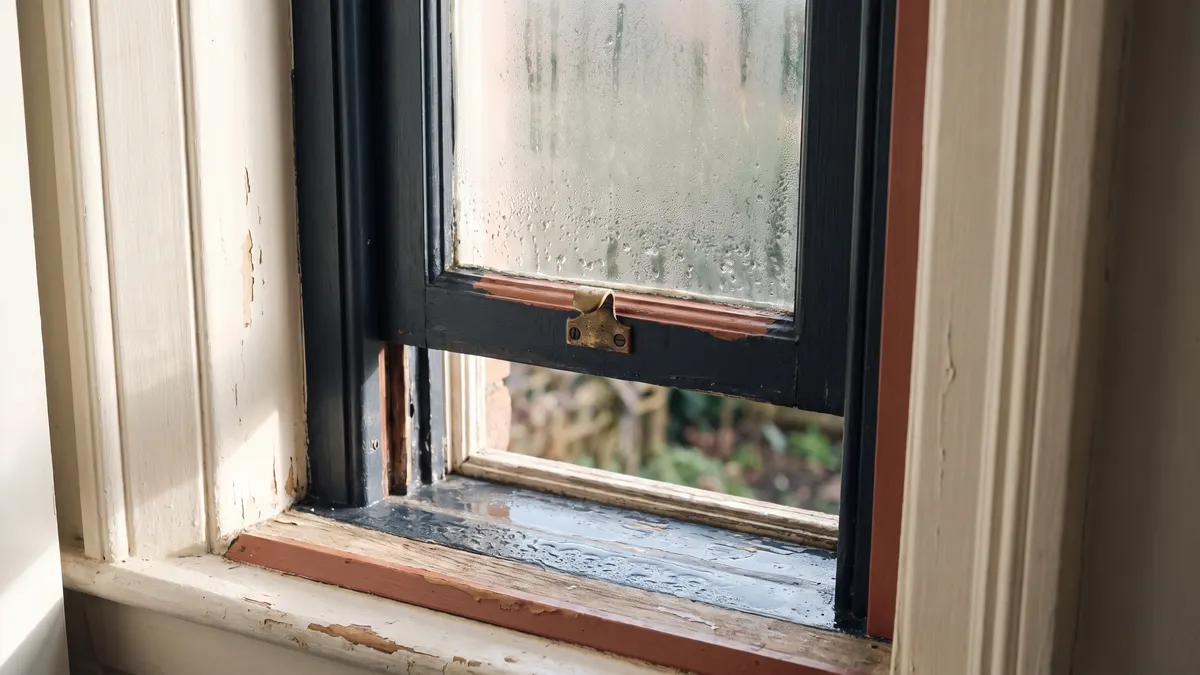
New windows rarely pay for themselves on energy bills alone, and anyone who quotes you a dollar figure of savings is guessing at your house. What a good window reliably changes is comfort: fewer drafts, rooms that hold their temperature, less condensation on the glass in winter, and sashes that actually open and stay up. Judge the upgrade on how the house feels and works, not on a projected utility number — and if only one or two windows are the real problem, you may not need a whole-house job.
Planning siding replacement in west metro Atlanta? Get a free written estimate.
Why the savings math is weaker than it sounds
Window ads love a single savings number, and it is worth being skeptical of every one of them. What a window saves you depends on how bad your current windows are, how much glass the house has, which way it faces, how your heating and cooling run, and your own thermostat habits. A number that is true on average can be wildly wrong for your specific house in either direction.
So the useful way to think about it is not payback. New windows are not a money-making investment that quietly recovers its cost on your power bill; the energy improvement is real but modest and slow. If the whole case for replacing rests on a promised dollar figure, be careful, because that figure is the easiest part of the pitch to inflate and the hardest to hold anyone to.
What actually changes when the windows are good
The honest reasons to replace windows are things you feel, not things you calculate. A room that used to have a cold draft along the floor in January stops having it. The spot by the window that baked every summer afternoon gets livable. The whole house holds the temperature you set it to for longer, so the system cycles less and the rooms feel even instead of patchy.
Condensation is the other everyday change. Old single-pane glass and failed seals let interior humidity collect and fog or drip at the glass in winter; a sound insulated unit keeps the inside face of the glass warmer, so that stops. None of this shows up cleanly on a bill, but it is what people actually notice living in the house.
What is really wrong with your old windows
Before replacing anything, it helps to name what has actually failed, because windows fail in a few specific ways and not all of them need a new window.
On a west-metro house the pattern follows the age of the stock. Older homes near the historic cores still have wood double-hungs where the sash cords or balances have given out, so the window will not stay up, and the sills have taken decades of Georgia rain. The 1990s subdivision stock has builder-grade vinyl and aluminum units whose insulated glass seals fail — that is the fog you see trapped between the panes — and whose hardware wears out. Knowing which of these you have changes the answer.
- Fogging or haze sealed between the panes — the insulated glass seal has failed on that unit.
- A sash that will not stay up, or is painted shut — a balance, cord or paint problem, not always a dead window.
- Soft, dark, or spongy wood at the sill or lower frame — rot, which needs addressing whether or not the window is replaced.
- A draft you can feel with a hand on a breezy day — often air leaking around the frame rather than through the window itself.
When a repair beats a replacement
Plenty of window complaints have a smaller fix than a full replacement. A double-hung that will not stay up often just needs new balances or sash cords. A painted-shut window needs freeing, not replacing. A fogged unit on an otherwise good window can sometimes have just the glass replaced rather than the whole window. Rot at a sill can be cut out and rebuilt.
The one that genuinely argues for replacement is widespread seal failure and worn hardware across most of the house, or rot that has gone past the sill into the framing. If you have one bad window in an otherwise sound set, fixing that one is usually the better money — an honest assessment names that case rather than defaulting to the whole house because it is the bigger job.
How to judge the window and the install
If you are replacing, two numbers on the sticker matter more than the brand in this climate. The U-factor describes how readily heat moves through the window, and a lower one insulates better. The Solar Heat Gain Coefficient describes how much of the sun's heat comes through the glass, and in a place with long, hot summers a lower one keeps west- and south-facing rooms from cooking. The right combination for Georgia leans toward rejecting summer heat.
The install decides whether any of that lasts. A high-rated window set into an opening that was not flashed or sealed properly leaks air around the frame and, worse, lets water behind the siding and into the wall below the sill. The flashing and the air-sealing around the frame are the quiet parts that outlive the glass rating, which is why the crew matters as much as the catalog.
Questions we get asked
- Will new windows pay for themselves in energy savings?
- Almost never on bills alone, and not on any timeline worth planning around. The energy improvement is real but slow. Replace windows for comfort, condensation and operation; treat any energy saving as a bonus rather than the reason.
- What is the fog trapped between the two panes of glass?
- That is a failed insulated-glass seal. The gas or dry air between the panes has been compromised and moisture has gotten in. It cannot be cleaned out, but on a sound window the glass unit alone can sometimes be replaced without replacing the whole window.
- Can a drafty window be fixed without replacing it?
- Often, yes. A lot of what feels like a drafty window is air leaking around the frame, which can be sealed, or worn weatherstripping and hardware that can be renewed. Replacement is the answer when the window itself is failing, not just leaking at the edges.
- Is triple-pane glass worth it in Georgia?
- Usually not the deciding factor here. Our climate is driven by summer heat more than deep winter cold, so a good double-pane unit with the right coatings and a low Solar Heat Gain Coefficient does most of the work. Triple-pane adds cost for a benefit that matters more in far colder places.
- Does the installation really matter that much?
- More than the brand. A well-rated window installed without proper flashing and air-sealing leaks around the frame and can let water into the wall below the sill. The install is what makes the rating on the sticker mean anything once the window is in the wall.
Reviewed 2026-10-09 by Dan James, WS Painting & Remodeling LLC.