
Does a new front door really change how your home looks?
A front door changes how the whole house reads from the street, but a sound door that just looks tired often needs refinishing, not replacing.
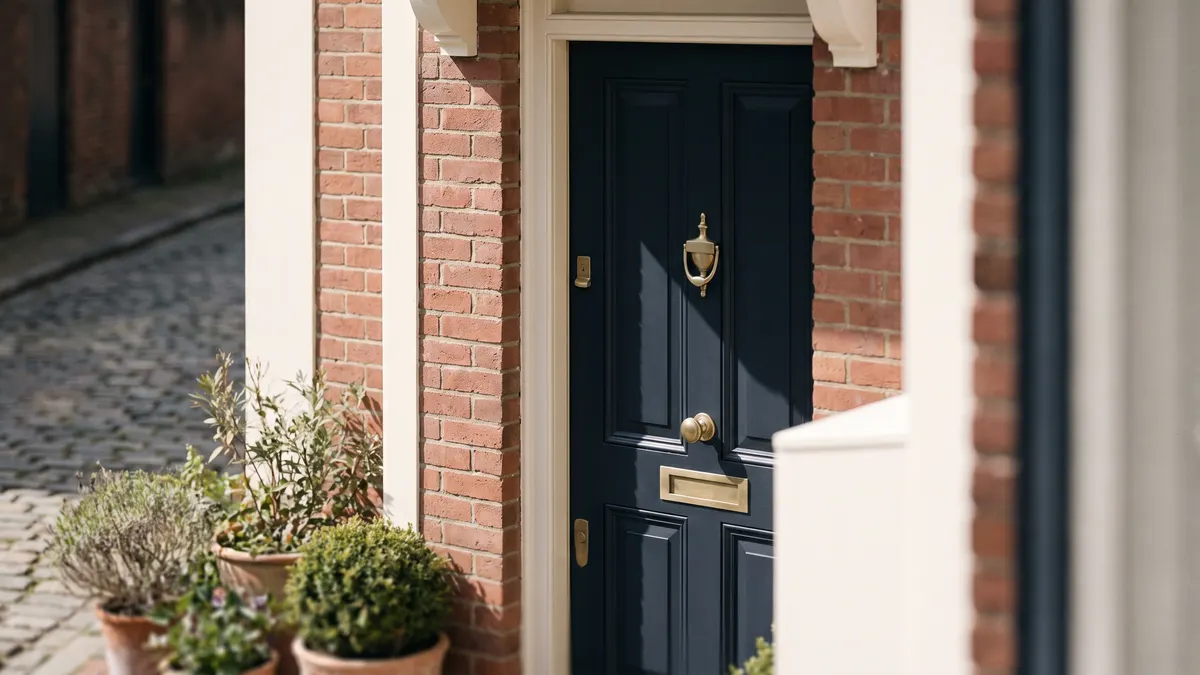
A front door is the one exterior element people see up close, so changing it shifts how the whole house reads from the street more than its size suggests. But 'transform' oversells it: if the door is structurally sound and only looks tired, refinishing it and replacing the weatherstripping gets most of that effect for a fraction of the work. Replace the door when it is drafty, sticking, or rotting at the bottom rail or threshold — not simply because it looks dated.
Planning siding replacement in west metro Atlanta? Get a free written estimate.
Why the front door carries so much weight
A front door punches above its size in how a house presents. It sits at eye level, framed by the porch and the entry, and it is the one part of the exterior a visitor stands right in front of while they wait. That is why a tired door can make a well-kept house look neglected, and a crisp one can pull a whole facade together.
The effect is mostly about how the door reads against everything around it — its color against the brick or siding, its proportion against the entry, and whether its style belongs on the house. A door that fits the house the way it was built looks right; one that fights the architecture looks added-on, no matter how new it is. That read from the street is the real thing a front door changes.
Is it the door, or just the finish?
Before you price a replacement, it is worth separating two different problems: a door that looks bad and a door that is bad. They often get treated as the same thing, and they are not.
A solid wood or fiberglass door that has faded, chalked or yellowed but is still flat, square and operating is a finish problem. Stripped or sanded, primed and repainted or refinished, with fresh weatherstripping, it reads as new — because the part you see is new. That is a day of work on a door you keep, not a replacement. We would rather repaint a sound door than see you replace one that did not need it.
What actually goes wrong with doors here
Georgia humidity and sun are hard on an entry, and the failures are specific. The bottom rail and the threshold take splashback and wind-driven rain, so that is where wood doors rot and steel doors rust first — often behind a finish that still looks fine higher up. Check the bottom few inches before you trust the rest.
Humidity also makes wood doors swell seasonally, so a door that latches fine in winter sticks in August. Weatherstripping hardens and stops sealing. Frames rack slightly as a house settles, so the gap around the door goes uneven and it no longer closes cleanly. And a door on a south- or west-facing entry gets cooked by afternoon sun, which breaks down finishes fast — darker colors most of all, because they run hotter.
Material reality: wood, fiberglass and steel
If the door genuinely needs replacing, the material is a trade, not a ranking, and Georgia weather tilts it.
Wood is the warmest-looking and the most repairable, but it moves with humidity and needs its finish kept up, especially on an exposed entry. Fiberglass is the most stable in this climate — it does not swell, rot or rust, holds a finish well, and can be made to look like wood. Steel is strong and lower cost, but it dents, and once the skin is breached at the bottom it rusts, which is the thing to watch on a door that takes weather.
- Wood: best looks and fully repairable, but it swells, moves and needs its finish maintained on an exposed entry.
- Fiberglass: most stable in Georgia humidity, no rot or rust, holds a finish, and can mimic wood grain.
- Steel: strong and lower cost, but prone to dents and to rust at the bottom once the surface is breached.
- Glass and sidelights: light and presence, with a privacy and a heat-gain tradeoff worth thinking through on a sunny entry.
Operation and keeping water out
A front door has to do two unglamorous jobs well: open and close cleanly, and keep water out at the bottom. Both are install details more than product features. A door that sticks, drags or has to be pulled hard to latch is usually hung slightly out of square, and that gets worse, not better, with time.
Water at the threshold is the one that does hidden damage. The sill pan and the flashing under and behind the threshold are what send water back outside instead of into the subfloor and framing. You cannot see them once the door is in, which is exactly why they get skipped on a rushed install and show up years later as a soft floor just inside the door. If you are replacing an entry, that detail is worth more attention than the handle set.
Questions we get asked
- Should I repaint my front door or replace it?
- Repaint or refinish it if it is structurally sound and only looks tired — that gets most of the visual change for far less. Replace it if it is rotting at the bottom, rusting, sticking from a racked frame, or leaking air and water, because those are problems a new finish cannot fix.
- What is the best front door material for Georgia?
- Fiberglass is the most forgiving here because it does not swell, rot or rust in the humidity and holds a finish on a sunny entry. Wood looks best and is repairable but needs upkeep; steel is strong and affordable but watch for rust at the bottom. The right one depends on exposure and how much maintenance you want.
- Why does my front door stick in the summer?
- Usually seasonal swelling. Wood takes on moisture in Georgia's humid months and expands, so a door that fit fine in winter binds in August. Sometimes it is a frame that has racked as the house settled. A sound door can often be adjusted or trimmed rather than replaced.
- Is a dark-colored front door a problem in the sun?
- On a south- or west-facing entry it can be. Dark colors absorb more heat, which runs the door and its finish hotter and can shorten how long the finish lasts and, on some doors, stress the door itself. It is not a rule against dark doors, just a reason to factor in exposure and use a finish rated for it.
- Does a new front door actually add value to a home?
- Resale figures for any single upgrade vary year to year and by market, so we would not hang the decision on a percentage. The dependable return is practical: it is the least disruptive way to change how the house presents, and it fixes a door that drafts, sticks or leaks at the same time.
Reviewed 2026-10-09 by Dan James, WS Painting & Remodeling LLC.