
Choosing doors that work, not just doors that trend
Most door trends solve a real problem in one room and create a new one in another; pick for privacy, sound, space and weather first.
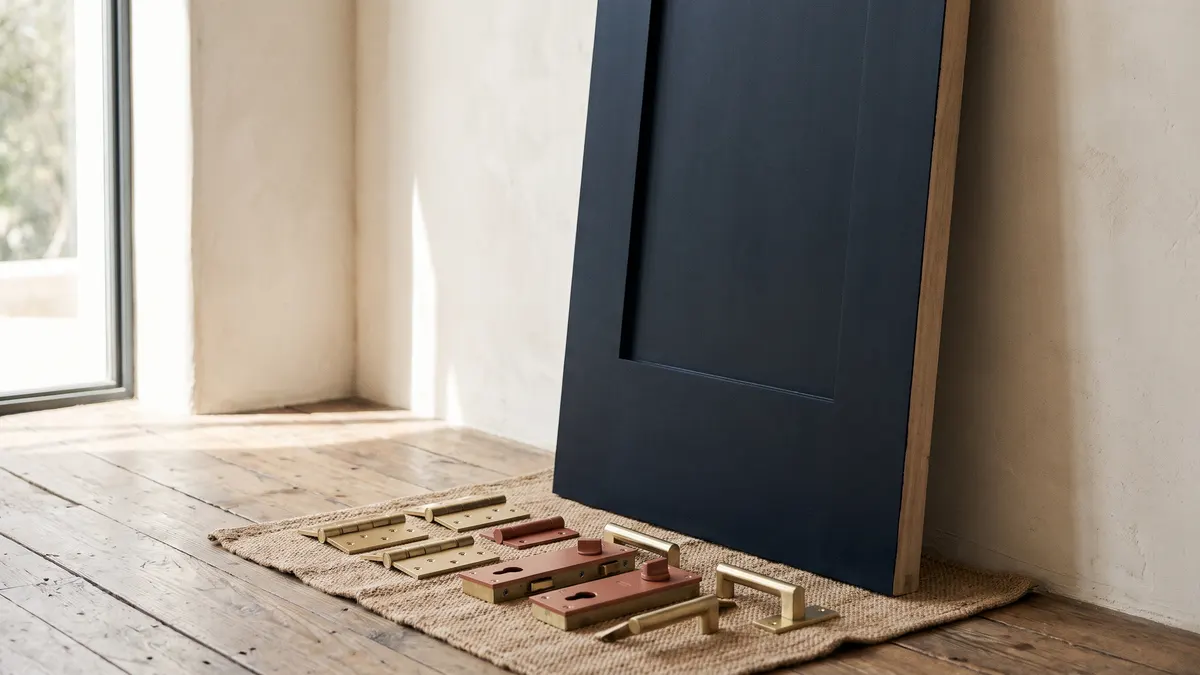
Most door 'trends' — barn doors, pocket doors, pivot entries, bold finishes — solve a real problem for some rooms and create a new one in others. A barn door looks good but blocks almost no sound and gives no real privacy; a pocket door frees floor space but is a headache to repair once it is hidden inside a finished wall. Choose the door for what the room actually needs — privacy, sound control, floor space, or weather resistance — and let the look follow from that.
Planning siding replacement in west metro Atlanta? Get a free written estimate.
Interior door types and their honest downsides
Every door style that gets popular is good at something and bad at something else, and the mistake is choosing for the look and finding out about the downside later. It is worth knowing the tradeoff before the door is hung, because some of them are hard to undo.
The through-line is simple: a swinging door on hinges is still the quiet, private, cheap default, and the alternatives trade some of that away for floor space or a look. That trade is fine as long as you know you are making it.
- Hollow-core doors are light and cheap but pass sound and feel flimsy; solid-core costs more and is what makes a bedroom or office actually quiet.
- Barn doors look good and save swing space, but they hang over the wall, seal nothing, block almost no sound, and give little privacy — poor choices for a bathroom or bedroom.
- Pocket doors free up the most floor space, but they live inside the wall, so repairs mean opening the wall, and they need the wall built to take them from the start.
- French and glass doors bring light between rooms at the cost of privacy — great for an office you want to feel open, wrong for a space you need to close off.
Exterior and storm doors in Georgia weather
Outside doors answer to the climate before they answer to style. Georgia's humidity swells wood, its afternoon storms drive rain at west-facing siding and doors, and the occasional cold snap finds every gap. A solid or insulated exterior door holds up to that better than a light hollow one, and it cuts outside noise as a bonus.
A storm door is the other lever, and it is a genuine trade rather than a clear win. It protects the main door from sun and rain and adds a layer of air, which helps a weathered entry. But on a door that gets strong afternoon sun, a glass storm door can trap heat against the main door and cook its finish faster, so it is worth matching the storm door's glass and venting to the exposure rather than adding one by reflex.
Paint a door instead of replacing it
A lot of doors that read as dated are structurally fine and just wearing the wrong finish. A sound door — interior or exterior — that is stripped or scuffed, primed and repainted reads as new, because the surface is what you were reacting to. On an interior door, swapping dated hardware at the same time does as much as the paint.
Color is where a door earns personality without a renovation, with one caution for this climate: a dark color on a door that takes direct afternoon sun runs hot, which is hard on the finish and, on some doors, on the door itself. Save the deep, heat-absorbing colors for shaded or interior doors, and the trade is all upside.
Hardware and the details that last
Hardware is where a door feels cheap or feels solid, and it is the easiest thing to get right. The handle and lock style — matte black, brass, nickel — is pure taste and worth matching across a floor so the house feels of a piece. What is not taste is the quality: a loose, rattly latch and thin hinges undo an otherwise good door every time you touch it.
The small parts do the quiet work. Good hinges keep a heavy door swinging true instead of sagging over the years; intact weatherstripping is most of what keeps an exterior door sealing; and a properly set strike is the difference between a door that latches with a push and one you have to lean on. None of it photographs, and all of it is what you feel daily.
When to move or widen a door, and when not to
Sometimes the door is not the problem; its location is. A doorway that dumps you into an awkward corner, or a narrow opening that makes a room feel closed off, can be relocated or widened, and occasionally that one change fixes how a whole space flows better than any amount of redecorating.
But it is worth being honest that this is real construction, not a door swap — framing, and often what is in the wall, has to move. So the question to ask is whether the flow problem is bad enough to justify opening a wall, or whether a different door in the existing opening solves enough of it. Often the smaller move is the right one, and a good estimate should say so plainly before anyone opens a wall.
Questions we get asked
- Are barn doors a good idea for a bathroom or bedroom?
- Usually not. Barn doors hang over the wall rather than sealing an opening, so they block very little sound and give limited privacy — the two things a bathroom or bedroom door is for. They work best on closets, pantries and rooms where you only want to hide the opening, not close it off.
- What is the downside of a pocket door?
- It saves floor space because it slides into the wall, but that is also the catch: the hardware lives inside the wall, so a repair means opening it up, and the wall has to be framed for the pocket from the start. Great where space is tight and the wall allows it; a poor retrofit into a wall that was not built for it.
- Can you just paint an interior door instead of replacing it?
- Often, yes. A sound door that only looks dated can be scuffed or stripped, primed and repainted to read as new, and updating the hardware at the same time does the rest. Replacement is for doors that are damaged, warped or the wrong type for the room, not for ones that are just the wrong color.
- What exterior door holds up best in Georgia humidity?
- An insulated fiberglass or a solid, well-sealed door handles the humidity and heat better than a light or hollow one, because it does not swell or rot the way untreated wood can. Whatever the material, the seal around it and the finish on a sun-facing door matter as much as the door itself.
- Do dark door colors fade faster in the sun?
- On a sun-facing exterior door, dark colors run hotter, which stresses the finish and can shorten how long it holds up. It is not a reason to avoid them everywhere — on shaded or interior doors they are fine — just a reason to match the color and finish to how much sun the door takes.
Reviewed 2026-10-09 by Dan James, WS Painting & Remodeling LLC.