
What looks modern now, and what will look dated in five years
Modern is less about a color than about restraint and fit. The schemes that still look right in ten years are usually the ones that were never trendy to begin with.
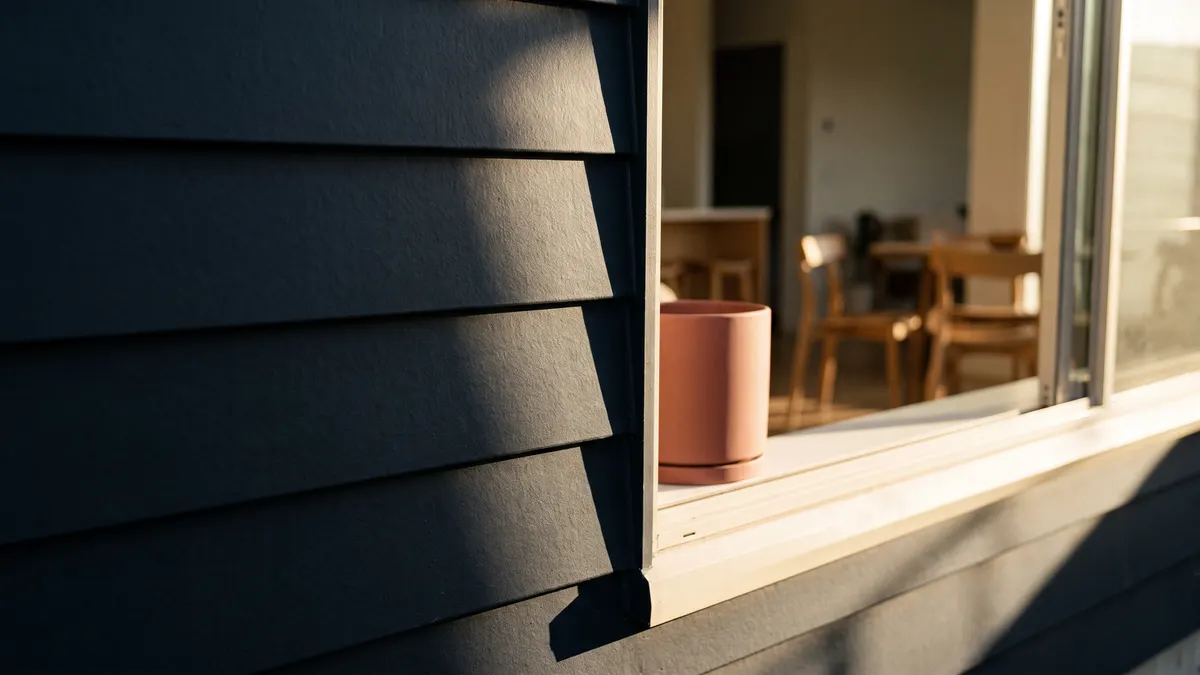
What reads as modern on a house is less about a specific color than about restraint and fit: a tight palette, clean contrast between body and trim, and colors drawn from the materials the house already has. What dates a house is chasing the exact trend of the moment. The all-gray wave is already cooling, and the stark black-and-white farmhouse look that is everywhere now will eventually read as painted in the mid-2020s the same way beige-on-beige reads as the early 2000s. The schemes that still look right in ten years are usually the ones that were never trendy to begin with.
Planning exterior painting in west metro Atlanta? Get a free written estimate.
Modern is restraint, not a color
When people say they want a modern exterior, they usually reach for a color, a particular gray, a black, a bold door. But what actually reads as current is rarely the color itself. It is restraint: a limited palette, clean lines between body and trim, and a scheme that does not try to do several things at once. A house with one well-chosen body color, a crisp trim, and a single deliberate accent at the door looks more current than one wearing three colors and the shade of the moment.
This is good news, because restraint does not go out of style the way a specific color does. The houses that look timeless are not the ones that nailed a trend; they are the ones that kept the scheme simple and let the architecture show. Modern, in practice, is mostly editing down.
The trend trap
Every few years a palette sweeps through and ends up on half the new facades. Right now it is the high-contrast black-and-white look that spread from the farmhouse style; a decade ago it was the first big wave of cool grays replacing beige. The trouble with painting your house in the exact trend at its peak is that the trend is a timestamp. When it fades, and it always fades, the house does not just look less fashionable, it looks pinned to the year it was done.
The all-gray wave is the live example. For years cool gray was the safe, current choice; now the coolest, bluest versions are starting to read as dated, and taste is drifting back toward warmer grays, greiges, and muted color. A house painted the trendiest gray at the peak is already on the downslope. Chasing the exact trend is how you buy a dated house in five years.
What ages well
The colors that still look right years later tend to share a few traits. They are usually muted rather than saturated, since a grayed, complex color weathers taste better than a pure, bright one. They are drawn from the fixed materials of the house, so they never fall fully out of step with the roof and brick that are not changing. And they keep the body-and-trim relationship clean rather than busy.
This is why a color that was never especially trendy is often the safest long-term choice. A warm, muted greige, a soft muted green, a considered off-white, none of them were ever the loud choice, so none of them have a peak to fall from. They read as deliberate rather than dated because they were chosen for the house, not for the year.
- Muted and slightly complex colors over pure, saturated ones.
- Body colors pulled from the roof, brick, or stone you are keeping.
- A clean two-part body-and-trim scheme with at most one deliberate accent.
The tells that date a house
A few things reliably pin a house to a past moment. Too many colors is one; the three- and four-color schemes that were fashionable in some eras now read as fussy. Painting a material purely to chase a trend is another, and brick is the cautionary case, because brick painted a trend color is expensive and very hard to undo, so a regret there is a lasting one. High-contrast schemes taken to an extreme date fast because the extreme is itself the fashion.
The subtler tell is a scheme that fights the house's own era and architecture. A stark, minimal black-and-white treatment can look sharp on the right house and costume-like on a traditional 90s two-story that was never built for it. When the color scheme and the architecture disagree, the eye reads redone rather than right, and that mismatch ages worse than any single color.
Accent choices date fastest of all, because they are where trend-chasing concentrates. A front door in the exact color of the moment, or a single wall picked out in a fashionable shade, is cheap to change but easy to regret, since the accent is the part of the scheme most obviously pinned to a year. A deliberate accent drawn from the house ages better than a borrowed one.
Architecture dictates more than the calendar
The same color scheme does not suit every house, and the surest way to look dated is to apply this year's look to a house whose bones say something else. A low 1960s or 70s brick ranch, a 90s builder two-story with a brick front and sided gables, and a true craftsman each have a color language that fits them, and the fit matters more than whether a palette is trending.
The practical rule is to let the house lead. Work with the roofline, the proportions, and the fixed materials, and choose a scheme that looks like it belongs on that house in particular. A scheme that fits the architecture reads as current far longer than one that was fashionable the season it went on, because belonging on the house does not expire the way being on trend does.
Choosing for ten years, not this spring
The test worth applying before you commit is simple: would this still look considered if the current trend were over? If the honest answer is that you are choosing it because it is everywhere right now, that is the reason to pause. If you are choosing it because it suits your roof, your brick, and the way the house is built, it will likely still look right long after the trend has moved on.
None of this means a house has to be timid. A deliberate color, used with restraint and chosen for the house, can be both current and durable. The distinction is between a scheme that is current because it fits and one that is current only because it matches this year, and only the first kind is still working in ten years.
Questions we get asked
- Is gray out of style for houses?
- Not gray as a whole, but the coolest, bluest grays from the peak of the trend are starting to read as dated, and taste is drifting toward warmer grays, greiges, and muted color. A grayed, warm-leaning color still looks current; the icy cool-gray that was everywhere a few years ago is the one on the downslope.
- Is black trim or are black windows a fad?
- High-contrast black is strongly tied to the current farmhouse-influenced look, which means it carries some timestamp risk. It can look right when it suits the architecture and is used with restraint, and costume-like when it is applied to a traditional house just to chase the trend. Judge it by whether it fits the house, not by whether it is popular now.
- How do I choose a color that will not look dated?
- Favor muted over saturated, pull the color from the roof and brick you are keeping, keep the scheme to a clean body and trim with at most one accent, and let the architecture lead. The simplest test is to ask whether you would still like it if the current trend were over. If you only want it because it is everywhere now, keep looking.
- Should I just pick a safe neutral so it never dates?
- A neutral is safer than a trend color, but neutral is not automatically timeless; a cold, flat neutral can look as dated as any fad, and beige-on-beige reads as its own era now. A considered, slightly complex neutral chosen to work with your fixed materials ages well; a neutral picked only to avoid a decision often falls flat.
- Can a dated color scheme make a house look older than it is?
- Yes; a scheme tied to a past trend can make a sound house read as neglected or stuck in time, even when nothing is wrong with it. That perception is exactly why repainting pays off: the same house in a scheme chosen for its architecture rather than a past fashion reads as current and cared-for.
Reviewed 2026-10-09 by Dan James, WS Painting & Remodeling LLC.