
Why prep is most of what you pay for in a paint job
The paint is the easy part. This is what prep actually includes, why skipping it is what makes paint fail, and how to read a quote for the work you cannot see.
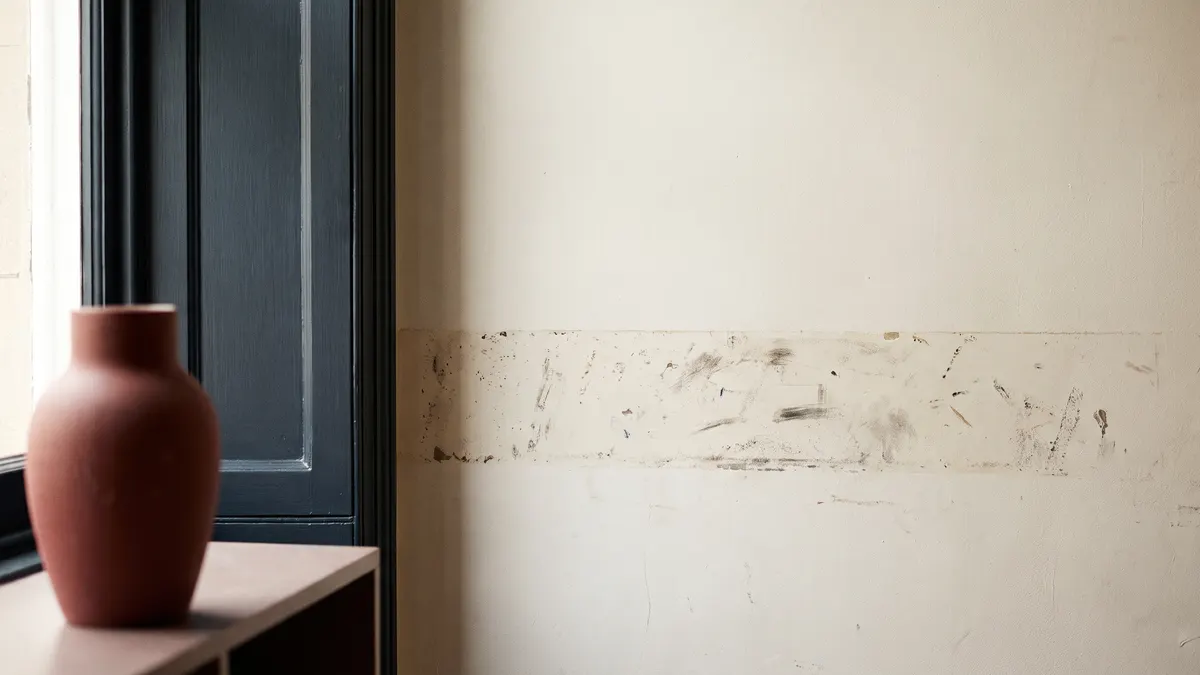
On a repaint, the paint going on the wall is the last and smallest part of the job. Most of what you pay for is prep — filling, caulking, sanding, cleaning, masking and priming — because that is what decides whether the finish lasts five years or peels in one. When one quote comes in far below the others, prep is almost always the line that got cut.
Planning interior painting in west metro Atlanta? Get a free written estimate.
The paint is the easy part
Rolling the finish onto a prepared wall is quick and satisfying, and it is the part everyone pictures when they imagine the job. It is also the smallest share of the work. By the time a crew opens the finish paint, the wall has already been filled, caulked, sanded, cleaned, spot-primed and masked — and that is where the hours, and most of the cost, have gone.
This is the single most useful thing to understand before you hire anyone, because it reframes what a painting quote is a price for. You are not mainly paying for color on a wall. You are paying for the preparation that makes the color stay there.
What prep actually includes
Prep is not one step but a stack of them, and the stack is where the hours go. Each item below is labor you are paying for, done before any color is opened — which is why a painting quote is really a price for this list, not for the rolling.
- Filling nail holes and dings, patching larger damage with setting compound, and sanding each one flush.
- Cutting out cracked, failed caulk at trim and tub lines and running fresh beads so the joints read clean.
- Washing kitchen walls to cut grease and bathroom walls for mildew, so paint can actually grip.
- Spot-priming patches, stains and bare drywall so they do not flash through the finish coat.
- Scuffing or deglossing glossy trim and doors so new paint bonds instead of sitting on top of it.
- Masking, moving and covering furniture, and protecting floors before a drop of finish is opened.
Why skipped prep fails, and when
Paint over bad prep does not fail right away, which is exactly why cutting it is tempting. It fails later, in predictable ways: it peels where it was rolled over grease or gloss it could not grip, patches and water stains bleed through where they were not primed, and joints that were never recaulked crack open again at the first humid summer. The homeowner who saved on prep pays for it in a repaint far sooner than they should have.
The failures are not random. Each one traces back to a prep step that was skipped — no degreasing, no primer, no scuff on the gloss, no fresh caulk. That is why the invisible work is the work worth paying for.
The steps that eat the hours
Not all prep is equal. A sound, smooth, previously flat wall needs little. The hours pile up on the rooms that fight back — heavy patching on damaged walls, matching an old texture, sanding down glossy trim and doors, and cutting out and redoing failed caulk through a whole bathroom. Old wallpaper residue is its own slow job. When a quote is higher than you expected, the condition of your walls is usually why.
It also means two rooms of the same size can cost very differently, and a painter who has actually looked at your walls can price it where one working from square footage alone cannot. Condition, not floor area, drives the labor.
Why a humid climate adds prep
Georgia summers add a step most price lists ignore. Humidity works the joints in a house, so hairline gaps at crown and baseboards open up and need caulk before painting, and kitchen and bathroom walls carry more film and mildew to wash off. Paint also cures slower in humid air, so coats wait longer between them — which is time, not laziness. A crew that rushes the recoat in August is building in a problem.
It is one more reason a local quote reflects the real work. The prep a west-metro house needs is not the prep a dry-climate house of the same size needs, and a schedule that respects the cure time is part of what you are paying for.
How to read a quote for its prep
Because prep is where the money is, it is also where quotes quietly differ. Two numbers far apart are rarely the same job at two prices — the low one usually got there by cutting prep or coats, and that choice is being made for you unless you ask. The way to compare fairly is to make each quote spell out the work under the paint.
- Ask what surface prep is included — filling, caulking, sanding, washing, priming — in writing.
- Ask how many finish coats, and whether a primer coat is included for a color change.
- Be wary of any number far below the rest; assume it skipped the part you cannot see.
- Trust the painter who asked to see your walls over the one who priced it by the room.
Questions we get asked
- Why is one painting quote half the price of another?
- Almost always prep and coats. The low quote usually skips filling, caulking, sanding, washing or priming, or does one coat where the job needs two. It is not the same job at a lower price — it is less job. Ask each one what prep it includes before you compare them.
- Can I skip primer to save money?
- On bare drywall, patches, stains and big color changes, no — primer is what stops those from bleeding or flashing through the finish. On a sound, similar-colored repaint you may not need a full prime coat, but spot-priming the repairs is not the place to save.
- Do you really have to sand?
- Where the old surface is glossy, yes — new paint will not grip a slick finish and will peel. Patches get sanded flush so they do not show through. Smooth, flat, sound walls need little sanding, which is part of why their prep costs less.
- How much of a paint job is prep?
- On a repaint, most of it. The finish coats go on quickly once the wall is ready; the filling, caulking, sanding, cleaning and priming before them are where the labor is. That is why the condition of your walls, not their size, drives the price.
- What hurts a paint job more, cheap paint or skipped prep?
- Skipped prep, by a distance. Good paint over bad prep still peels; decent paint over proper prep lasts. If you have to choose where the money goes, it goes into preparation first.
Reviewed 2026-10-09 by Dan James, WS Painting & Remodeling LLC.