
Painting a pre-1978 house: what lead-era coatings change
Why the age of the house changes the prep, not the paint — and what to ask before anyone starts sanding.
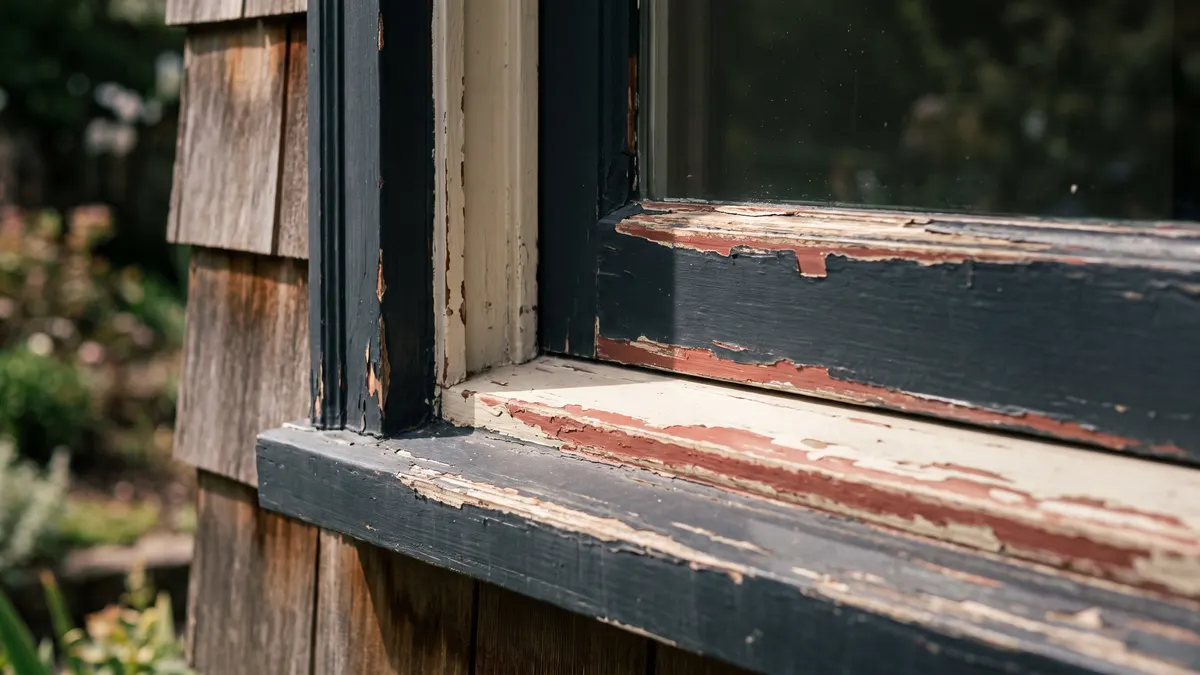
If a house was built before 1978 its original coatings may contain lead, which changes how the surface is prepared rather than what goes on top. The work is done with containment, wet methods instead of dry sanding, and controlled clean-up, so disturbed material stays in one place. It makes prep slower and the job more expensive, and it matters most on exteriors and on friction surfaces like windows and doors.
Planning interior painting in west metro Atlanta? Get a free written estimate.
Why 1978 is the line
Lead was removed from consumer house paint in the United States at the end of the 1970s. A house built after that is very unlikely to have lead-era coatings; a house built before it may well have them under later layers, even if it has been repainted several times since.
Plenty of the stock we work on sits on the wrong side of that line — older ranches and split-levels, mill-era housing, and anything around a historic downtown. It is common rather than exotic, and it is manageable.
What actually changes on site
The paint that goes on is the same paint. What changes is everything before it.
- Dry sanding and open power-washing of suspect surfaces are avoided, because both turn a stable coating into airborne or waterborne dust.
- Wet methods are used instead, which is slower and leaves less behind.
- The work area is contained and sheeted, and the containment is cleaned up rather than swept out.
- Windows, doors and anything that rubs get the most attention, because friction is what releases material over time.
- On an exterior, the ground under the work is protected — soil is where disturbed exterior coatings accumulate.
What it means for cost and timeline
Expect prep to take noticeably longer than on a modern house, and expect that to show in the price. The paint is a small part of any repaint; the preparation is the job, and on an older house there is simply more of it.
It is worth knowing this before you compare quotes on an older home. A number that looks dramatically lower than the others usually means the prep has been priced as though the house were new — which is a problem that surfaces as peeling eighteen months later.
What to ask any contractor
You do not need to know the regulations to ask good questions. Three are enough to tell you whether someone has thought about it.
- How will you prepare the surfaces, specifically — and will any of it involve dry sanding or pressure washing?
- How will the work area be contained, and how will the clean-up be handled?
- Will you test, or assume, that the existing coatings are lead-era?
What we do not claim
We are painters, not an abatement service. We work in a way that avoids disturbing old coatings and keeps what is disturbed contained, and if we find a surface in a condition we should not be working on, we will tell you and stop rather than paint over it.
If you want certainty about what is on your walls, that is a test, not an opinion — and it is cheap relative to the work.
Questions we get asked
- How do I know when my house was built?
- Your county tax assessor record will tell you, and it is public. For most of the west metro you can look it up in a couple of minutes.
- Does repainting over lead-era paint make it safe?
- A sound, intact, painted-over surface is generally stable — the risk comes from disturbing it. That is exactly why prep method matters more than the topcoat, and why "we will just paint over it" is not automatically the wrong answer, as long as nobody sands it dry first.
- Is this only an issue on interiors?
- No, and exteriors are often the bigger one. Exterior coatings weather, chalk and shed, and the material ends up in the soil around the house. It is why open pressure-washing an old exterior is the wrong first move.
- Will you test for lead?
- We will tell you when a house is old enough that it is worth testing, and work as though coatings are lead-era when the age says they might be. Testing itself is a separate service and we would rather you got it from someone whose only job is that.
- Does this make the job much more expensive?
- More expensive, yes — not dramatically, usually. The extra is in labor hours for prep and clean-up, not in materials. On a quote for an older house, that extra labor is the difference between a repaint that lasts and one that fails early.
Reviewed 2026-10-09 by Dan James, WS Painting & Remodeling LLC.