
Repainting a business without closing the doors
A commercial repaint is mostly a scheduling problem. Here is how a space gets refreshed around operating hours without blocking staff or customers.
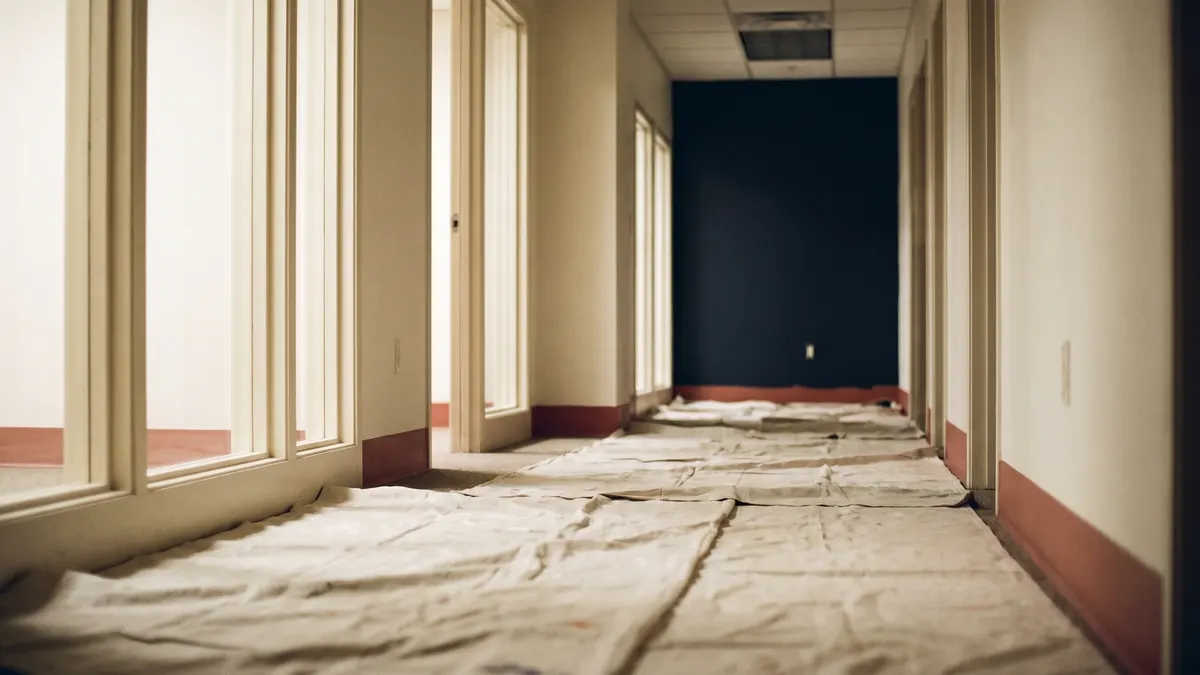
A commercial space gets repainted while it stays open by treating it as a scheduling problem first and a painting problem second. The work is split into zones so the business is never fully down, the heavy or disruptive areas are done after hours or on weekends, and low-odor, low-VOC coatings let a space reopen the next day. Floors, fixtures and equipment are covered and wet areas are barriered off so customers and staff stay clear. Note that this is painting and finish work — refreshing walls, trim and high-wear surfaces — not moving walls or changing the layout.
Planning commercial painting in west metro Atlanta? Get a free written estimate.
The real constraint is the schedule, not the paint
Painting a business is mostly scheduling. The paint itself goes on the same way it does in a house; what makes a commercial job different is that the doors usually have to stay open while it happens, and the smell and mess have to be out of the way by the time customers arrive.
That is why the plan matters more than the product on a commercial repaint. Before anyone opens a can, the useful work is deciding what can be painted during business hours, what has to wait for nights or weekends, and where staff and customers will walk while a given area is wet. Get that right and a refresh barely registers to the people using the building. Get it wrong and a simple repaint turns into blocked aisles and a closed section on your busiest afternoon.
Walk the space with whoever runs it
A commercial repaint starts with a walk-through alongside whoever runs the building — an owner, a manager, or a property manager who sets the building rules. The point is to map the space against how it actually operates: when the lobby is busy, which corridors staff rely on, what equipment cannot be moved, and which areas handle sensitive material and need to be sealed off rather than just covered.
That conversation decides the whole phasing plan. A restaurant repaints around its service hours differently than an office does around a nine-to-five, and a retail floor has its own rhythm again. Agreeing it up front — in writing, with the access and color decisions settled — is what keeps the job from colliding with the business.
Working in sections so the space is never fully down
The core technique on an occupied commercial space is phasing. Walls and ceilings are rolled or sprayed in sections so one part of the building is being painted while the rest stays open and usable. A large job is simply broken into more phases; it takes more visits, but it never takes the whole space offline at once.
Some areas are still better done closed or overnight — a main entrance, a tight corridor everyone has to use, or a room full of equipment that cannot be worked around safely. Those get scheduled for after hours or a slow day. The goal throughout is the same: the business keeps running, and the painting moves through it one zone at a time.
Keeping odor and mess away from customers
The two things customers notice about a repaint are the smell and the barriers, and both are managed rather than left to chance. Low-odor, low-VOC coatings cut the smell so a space is usually usable the next day, and ventilating the area while it dries clears what little lingers. The heavy-odor or dusty prep work gets pushed to off-hours where it can.
The mess is handled with protection and clear signage. Floors, fixtures, counters and equipment are covered before any work starts, and wet areas are marked with signs and barriers so no one leans a hand or a coat against a fresh wall. Anything that could be damaged, or that handles sensitive material, is moved or sealed off instead of painted around and hoped for.
The surfaces a business actually wears out
A commercial space does not wear evenly, and a repaint is a chance to put the right finish where the building takes its abuse. Corridors, corners, door frames and the areas around entrances get scuffed and cleaned constantly, so those get a harder, more washable finish than an open wall that nobody touches.
Different surfaces also need different handling. Drywall, block, metal and masonry each take their own primer, and old wallcovering comes off rather than getting painted over. On the outside, storefronts, block, metal and trim get washed, repaired and recoated, with the summer heat and afternoon storms planned around. Matching the coating to how each surface is used is what keeps a commercial finish from looking tired again within a year.
- Corridors, corners and entrance walls: harder, washable finishes where hands and carts hit the wall.
- Doors, frames and trim: a tougher finish that stands up to constant use and cleaning.
- Metal, block and masonry: the right primer for the substrate, not a one-size wall paint.
- Storefront exteriors: washed, repaired and recoated, scheduled around heat and storms.
Where painting ends
It is worth being plain about scope, because 'commercial remodeling' can mean anything from a repaint to gutting a floor plan. What we provide on a commercial project is the painting and finish work — walls, ceilings, trim, doors and high-wear surfaces, inside and out — done around your operations so you keep running.
We do not move walls, change layouts or handle the structural side of a commercial build-out; that is a different trade. If a refresh is what the space needs, phasing a repaint through an open building is exactly the kind of work that improves how a space looks and feels without closing it. If the space needs more than paint, the honest answer is to say so rather than stretch our scope to fit the request. We will also coordinate colors, access and building rules with your property manager or landlord so the finished work meets their requirements too.
Questions we get asked
- Can you paint while we stay open?
- Usually, yes, by working in sections and scheduling the disruptive areas after hours or on a slow day. We plan it with you so customers and staff are never blocked from the parts of the building they need. Some spaces — a main entrance, a tight shared corridor — are better done fully closed or overnight, and we flag those up front.
- What about the smell during business hours?
- We use low-odor, low-VOC products and ventilate the area while it dries, so a space is usually usable the next day with at most a faint smell for a short time. The heavier-odor prep gets pushed to off-hours where the schedule allows, so customers are not sitting in it.
- How long will a commercial repaint take?
- A small office or shop can be a few days. A larger building takes longer and is usually phased across several visits so it is never fully offline. We give you a schedule after walking the space, because the timeline depends on the square footage, the ceiling height and how many phases it has to be split into to keep you open.
- Do you work with our property manager or landlord?
- Yes. We coordinate colors, access, after-hours entry and any building rules with whoever manages the property, so the finished work meets their requirements as well as yours. On a leased space that coordination is part of the job, not an afterthought.
- Do you handle commercial remodeling, or only painting?
- We handle the painting and finish work — interior and exterior walls, ceilings, trim, doors and high-wear surfaces — not moving walls or changing the layout. If your project needs structural or layout changes, that is a different trade, and we will tell you that rather than take on work outside what we do well.
Reviewed 2026-10-09 by Dan James, WS Painting & Remodeling LLC.